20 Pool Safety Rules for Kids Every Family Should Follow
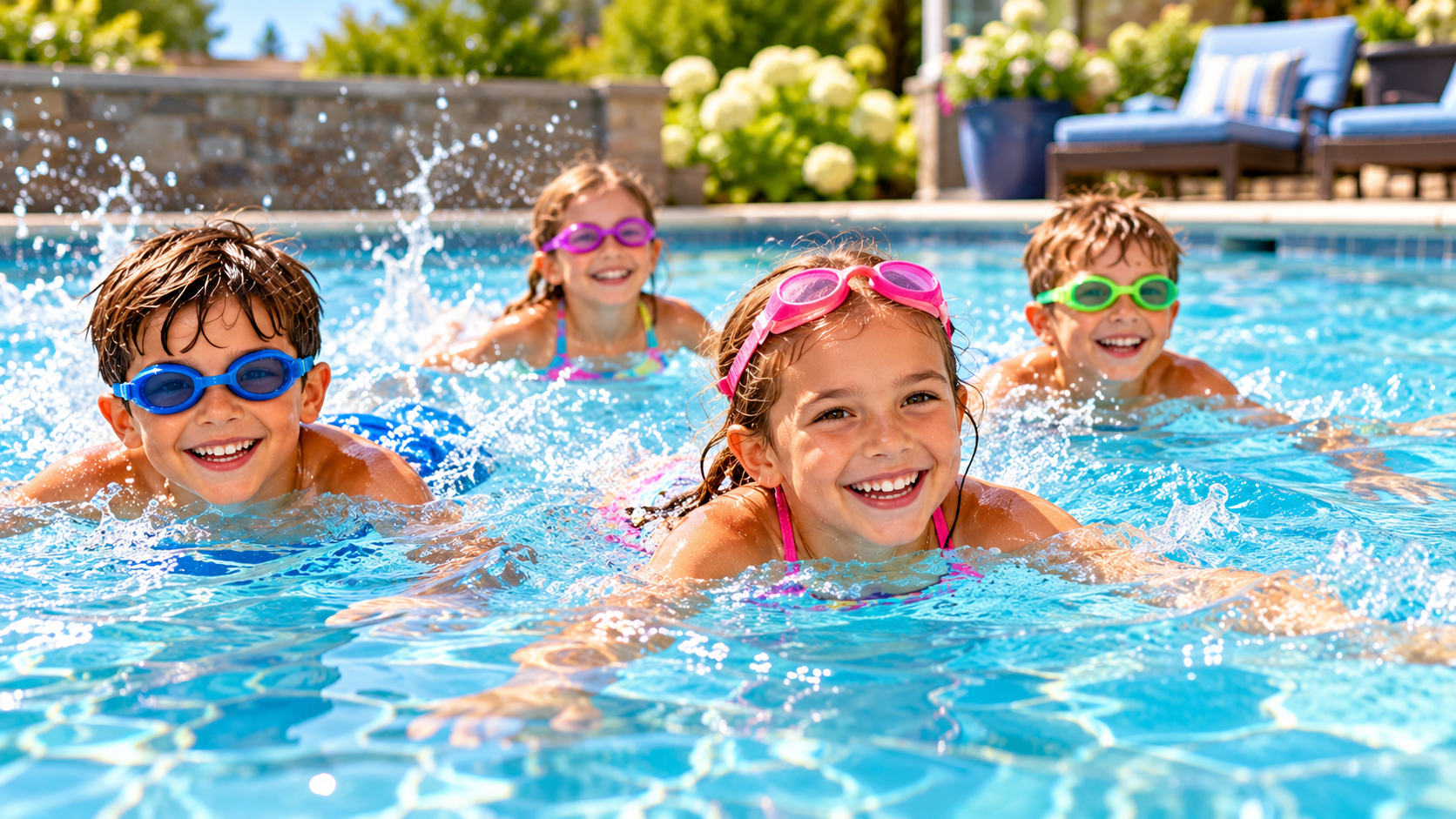
Swimming pools and kids go together like summer vacation and wet towels on the bathroom floor.
A backyard pool can provide hours of entertainment, exercise, and family fun.
But there's one thing every parent needs to understand: Water safety is never something you can put on autopilot.
Drowning can happen quickly and quietly. A child in trouble may not splash, shout, or look the way drowning is portrayed in movies. And even children who know how to swim need supervision.
The good news is that you can reduce the risks by establishing clear pool safety rules, teaching children what to do around water, and making sure responsible adults are actively supervising.
Here are 20 essential pool safety rules every family should know.
1. Never Let Children Swim Without Adult Supervision
This is the most important pool safety rule. Children should never swim or play around a pool without appropriate adult supervision.
A responsible adult needs to be actively watching the water—not checking email, preparing lunch, or chatting with neighbors while occasionally glancing toward the pool.
For young children and inexperienced swimmers, an adult should remain within arm's reach in the water.
Older, capable swimmers still need supervision appropriate to their age, skills, and environment. Don't assume someone else is watching. Assign the responsibility clearly.
2. Designate a Water Watcher

At pool parties and family gatherings, it's easy for adults to assume somebody else is supervising the children.
Unfortunately, everybody watching can quickly become nobody watching. Choose a responsible adult to serve as the designated water watcher.
That person should:
- Focus entirely on the pool.
- Avoid phone use and other distractions.
- Avoid alcohol or impairing substances.
- Stay positioned to see the swimmers.
- Be ready to respond immediately.
- Clearly transfer responsibility when taking a break.
For longer gatherings, adults can take turns. But the handoff must be explicit.
"Can you watch the kids while I go inside?" is much better than disappearing and hoping somebody notices.
3. Keep Young Children Within Arm's Reach
For toddlers, preschoolers, and children who aren't strong swimmers, close supervision means more than sitting nearby.
An adult should be in the water and close enough to reach the child immediately. This is sometimes called touch supervision.
Even shallow water can be dangerous. And flotation toys don't change the need for close supervision.
A child doesn't become water-safe simply because they're wearing something inflatable and brightly colored.
4. Teach Children to Ask Permission Before Entering the Pool
Make this a household rule:
No child enters the pool or pool area without permission from the supervising adult.
Children should understand that swimming is an activity requiring adult supervision. Not something they can start whenever the mood strikes.
Practice the rule regularly. For younger children, use simple language:
"Stop. Find an adult. Ask before going near the water."
This rule helps establish expectations, but it does not replace physical barriers and supervision.
5. Install a Four-Sided Pool Fence
A properly installed pool fence is one of the most important protections against unsupervised access.
For residential pools, safety organizations generally recommend a four-sided isolation fence that separates the pool from the house and yard.
A commonly recommended minimum height is four feet, although local laws may require more. The fence should have a self-closing, self-latching gate with a child-resistant latch.
It should also be designed to discourage climbing and prevent children from squeezing underneath or through openings. Keep furniture and other climbable objects away from the fence.
A fence is a critical safety layer. It isn't a substitute for watching children while they're swimming.
6. Keep Pool Gates Closed and Latched
A pool fence only works when the gate is properly secured. Check that the gate:
- Closes automatically.
- Latches securely.
- Isn't propped open.
- Has no damaged hardware.
- Cannot be easily opened by a young child.
Teach older children never to leave the gate open. And remind guests to close it behind them. A gate left open for convenience can defeat the purpose of the entire barrier.
7. Consider Door and Pool Alarms
Door alarms, gate alarms, and certain pool-entry alarms can provide additional warning when someone accesses the pool area.
Choose devices appropriate for your property and maintain them according to manufacturer instructions. Test alarms regularly.
Remember that alarms are supplemental safety measures.
They do not replace a compliant pool barrier or active adult supervision. An alarm can alert you to a problem. It cannot supervise a swimming child.
8. Enroll Children in Swimming Lessons
Age-appropriate swimming lessons can help children develop important water skills.
Children can learn how to:
- Enter and exit the water safely.
- Float.
- Turn toward safety.
- Move through the water.
- Recognize their limitations.
- Follow instructions around pools.
The appropriate starting age depends on the child's development, readiness, and circumstances. Ask your pediatrician or a qualified swimming instructor for guidance.
And remember: Swimming lessons reduce risk, but they do not make a child drown-proof. Even confident swimmers can experience emergencies.
9. Teach Kids Never to Swim Alone
Children should learn that swimming alone is never acceptable. Older children and teenagers should also understand the importance of swimming with appropriate supervision and following facility rules.
A friend or sibling is not a substitute for a responsible supervising adult. The buddy system can provide an additional layer of awareness.
But it doesn't replace trained lifeguards or adult supervision. Two children swimming alone are still two children without adequate supervision.
10. No Running Around the Pool
Wet pool decks can be slippery. Make walking—not running—the rule around the pool. Teach children to:
- Walk on wet surfaces.
- Keep toys out of walkways.
- Avoid pushing and shoving.
- Use handrails when appropriate.
- Wear suitable footwear outside the water.
A slip near the pool can cause serious injury. The race to the diving board can wait.
11. Never Push or Dunk Other Swimmers
Rough play can become dangerous quickly. Establish clear rules against:
- Pushing someone into the pool.
- Holding another person underwater.
- Dunking someone unexpectedly.
- Jumping onto another swimmer.
- Pretending someone is drowning.
Children should also learn to stop immediately when someone says they're uncomfortable or frightened.
Water games should be enjoyable for everyone. Not an endurance test for the child who didn't want to be dunked in the first place.
12. Follow Diving and Jumping Rules
Never allow diving into shallow water or any area not specifically designated and confirmed safe for diving.
Children should follow posted pool rules and instructions from qualified supervisors.
Before jumping into a permitted area, they should check that the landing area is clear of people and obstacles. Avoid jumping near pool walls, steps, or other structures.
Don't assume a backyard pool is deep enough for diving. Many aren't. A single unsafe dive can cause catastrophic head or spinal injuries.
13. Keep Children Away From Pool Drains and Suction Outlets
Pool drains and suction systems can create dangerous entrapment hazards. Teach children to stay away from drains, suction fittings, and other pool openings.
Never allow children to play with or remove drain covers.
If a drain cover is missing, loose, broken, or damaged, keep everyone out of the pool until the system has been inspected and repaired by a qualified professional.
Pool owners should ensure drain covers and suction systems comply with applicable safety requirements. This is not a repair to postpone until next weekend.
14. Don't Rely on Inflatable Toys for Safety
Pool noodles, inflatable rings, water wings, and floating toys are not lifesaving devices. They can deflate, slip off, or tip over.
Children who need flotation assistance should use an appropriately sized, properly fitted U.S. Coast Guard-approved life jacket when suitable for the activity.
A life jacket adds protection but never replaces supervision. And inflatable toys should be treated as toys. Not as personal lifeguards.
15. Remove Toys From the Pool After Swimming
When swimming is over, remove floating toys from the water. Brightly colored toys can attract young children back toward the pool. Store them somewhere away from the pool edge.
Also remove equipment and clutter that could create tripping hazards or provide access over a pool barrier.
A floating beach ball may seem harmless. But it shouldn't become the reason a child approaches an unsupervised pool.
16. Keep Rescue Equipment Nearby
Every home pool should have appropriate rescue equipment that is readily accessible.
Depending on the pool, that may include:
- A reaching pole or shepherd's crook
- A suitable ring buoy or rescue flotation device
- A phone for calling emergency services
- Clearly posted emergency information
Adults should know where the equipment is and how to use it. Equipment should be maintained and kept free of obstructions.
A rescue pole buried behind the lawn mower isn't especially helpful during an emergency.
17. Learn CPR and Emergency Response
Parents, caregivers, and other adults supervising swimmers should learn CPR, including age-appropriate techniques for children. Take a recognized CPR course and refresh your training as recommended.
If someone is drowning, activate emergency services immediately and begin rescue and resuscitation as appropriate to your training and the situation.
Never enter dangerous water if doing so would put you at serious risk. Use safe reaching or throwing rescue methods when appropriate.
A child who has been submerged or experienced a drowning incident needs urgent medical evaluation, even if they initially appear to recover.
The time to learn CPR is before an emergency happens. Not while someone is searching for a tutorial on their phone.
18. Know the Signs of a Swimmer in Trouble
Drowning doesn't always involve shouting or dramatic splashing. Warning signs may include:
- A child struggling to keep their mouth above water
- An upright position with little effective movement
- Difficulty moving toward the pool edge
- Unusual silence or lack of response
- A swimmer suddenly disappearing beneath the surface
Sometimes there are few obvious warning signs. That's why continuous, attentive supervision matters.
If a child is missing, check the pool and other nearby water immediately while emergency help is summoned. Every second matters.
19. Secure the Pool When Swimming Is Over
Pool safety doesn't end when the last swimmer gets out. Before leaving the area:
- Make sure every child is accounted for.
- Remove toys from the water.
- Close and latch gates.
- Secure doors leading to the pool area.
- Check that safety equipment is in place.
- Activate applicable alarms or safety systems.
Use compliant safety covers when appropriate, following manufacturer instructions and local requirements.
A solar cover or ordinary floating cover is not a safety cover and may create an additional hazard.
The pool should be secured every time swimming ends. Not just at bedtime.
20. Review Pool Rules With Kids and Guests
Don't assume children know the rules simply because they've been swimming before. Review expectations at the beginning of the swimming season and before pool parties.
Explain the rules to visiting children and their parents. Keep instructions simple and direct. You might say:
"Nobody goes near the water without the supervising adult. We walk around the pool, we don't push or dunk, and everyone follows the water watcher's instructions."
Repeat the rules as needed. Children forget. Adults get distracted.
And summer excitement has a way of making everyone a little less attentive.
Ten Pool Rules Kids Can Remember
These are simple enough to review before swimming or post near the pool.
- Always ask an adult before going near the pool.
- Never swim without a supervising adult.
- Walk—don't run—around the pool.
- Never push or dunk anyone.
- Stay away from pool drains.
- Follow the rules about jumping and diving.
- Don't depend on inflatable toys to keep you safe.
- Tell an adult immediately if someone is in trouble.
- Stay within the swimming area you're allowed to use.
- Get out of the pool when the supervising adult says swimming is over.
These rules support safer behavior, but children still need appropriate supervision and physical protections.
Backyard Pool Safety Checklist for Parents
Before the swimming season begins, inspect the pool area.
Pool Barriers
- Pool is separated by an appropriate fence or barrier.
- Gates close and latch automatically.
- Fence and gate hardware are in good condition.
- Furniture and other climbable objects are away from barriers.
- Applicable alarms are working.
Pool Equipment
- Drain covers are intact and compliant.
- Rescue equipment is accessible.
- A phone is available for emergencies.
- Pool surfaces and steps are in good condition.
- Pool chemicals are securely stored according to their labels.
Family Preparedness
- Children know the pool rules.
- Adults understand water-watcher responsibilities.
- Supervising adults know how to respond to emergencies.
- CPR training is current.
- Swimming abilities have been assessed realistically.
- Emergency contact information is available.
After Swimming
- Every child is accounted for.
- Toys have been removed from the water.
- Gates are securely latched.
- Doors and alarms are secured as appropriate.
- The pool area is left inaccessible to unsupervised children.
Pool Party Safety: Don't Let Supervision Get Lost in the Crowd
Pool parties can be especially challenging because adults are busy with food, guests, and activities. Before the party:
- Assign a designated water watcher.
- Arrange additional supervision based on the number, ages, and abilities of swimmers.
- Ask parents about children's swimming abilities.
- Establish clear rules for entering the water.
- Keep food and games away from the pool edge when practical.
- Make sure rescue equipment is accessible.
- Explain how supervising adults will rotate responsibilities.
A lifeguard, when available, provides an important additional layer of protection.
But parents should not assume that a crowded pool is automatically a well-supervised pool.
And if the party becomes too busy to supervise safely, pause swimming. The birthday cake can wait.
The Bottom Line: Pool Safety Is Everyone's Responsibility
Swimming should be one of the pleasures of summer. Kids get exercise. Families spend time together. And everyone comes inside hungry, tired, and dripping water across the kitchen floor.
That's the good part. The responsibility is making sure the fun happens as safely as possible.
Install appropriate barriers. Teach children clear rules. Provide swimming instruction. Keep rescue equipment accessible.
And above all, make sure a responsible adult is actively supervising whenever children are in or around the water.
Because when it comes to pool safety, attention is far more important than convenience. And a few sensible precautions can help protect the people who matter most.
Keep Going
Make your home and family activities safer with these related guides:
- Four Steps to a Safe Home: Identify and reduce common household hazards.
- Home Safety Tips: Practical ways to protect your family throughout the house.
- Backyard Family Living: Make outdoor spaces more enjoyable and family-friendly.
- Carpool Rules for Kids: Teach children everyday safety and courtesy habits.
- Family Life Tips: More ideas for managing family routines and activities.
- Clean Home
- Safe at Home
- Pool Safety Rules for Kids