Christmas Tree Care:
How to Keep Your Real Tree
Fresh and Beautiful
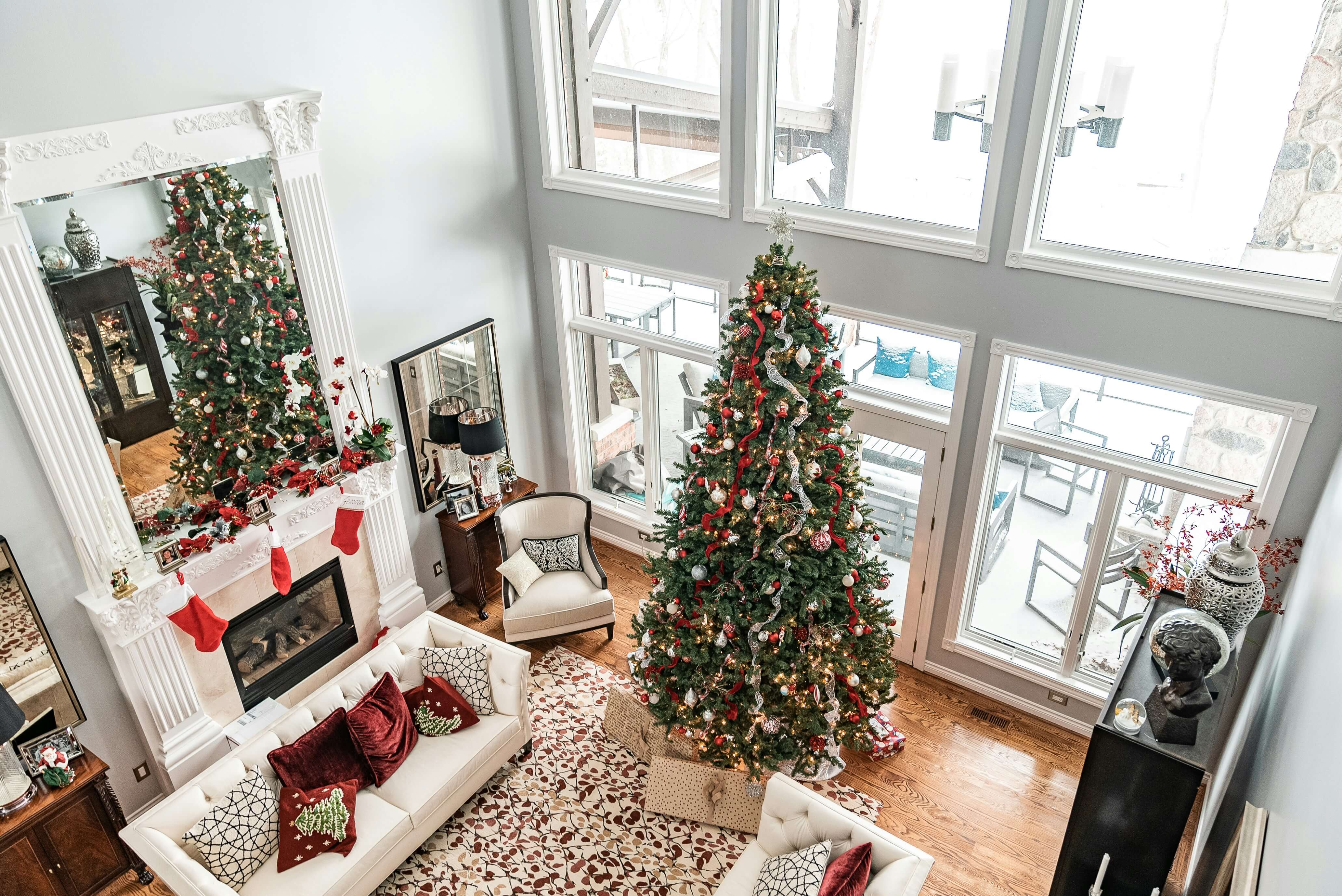
There is a very specific moment when bringing home a real Christmas tree feels like an excellent idea.
You've found The Tree. It's full. It's green. It smells wonderful.
Someone ties it to the car, and you drive home feeling like you've personally rescued Christmas from a forest.
Then you get it inside. The tree is suddenly two feet wider than it appeared outdoors. The trunk doesn't fit the stand.
The top is bent against the ceiling. There are needles everywhere. Someone is underneath it tightening bolts while another person announces:
“It's leaning.”
Welcome to real Christmas tree ownership. A fresh-cut tree does require some care, but the basic system isn't complicated.
Start with a fresh tree, keep the trunk continuously watered, keep it away from heat, check it daily, and take it down when it dries out.
That's most of the job.
The rest is convincing everyone that, yes, it really is leaning.
1. Measure Before You Buy the Tree
Before leaving home, measure:
- Ceiling height
- Available floor width
- Tree-stand capacity
- The space between the tree and nearby furniture
Remember to allow room for:
The tree stand + the tree + the topper.
An eight-foot ceiling does not mean you should buy an eight-foot tree. Not unless the angel on top is prepared to spend December lying horizontally.
Also measure the doorway if you're contemplating an especially enormous tree.
Christmas trees look considerably smaller while standing among other Christmas trees. This is how they get you.
2. Choose the Freshest Tree You Can Find
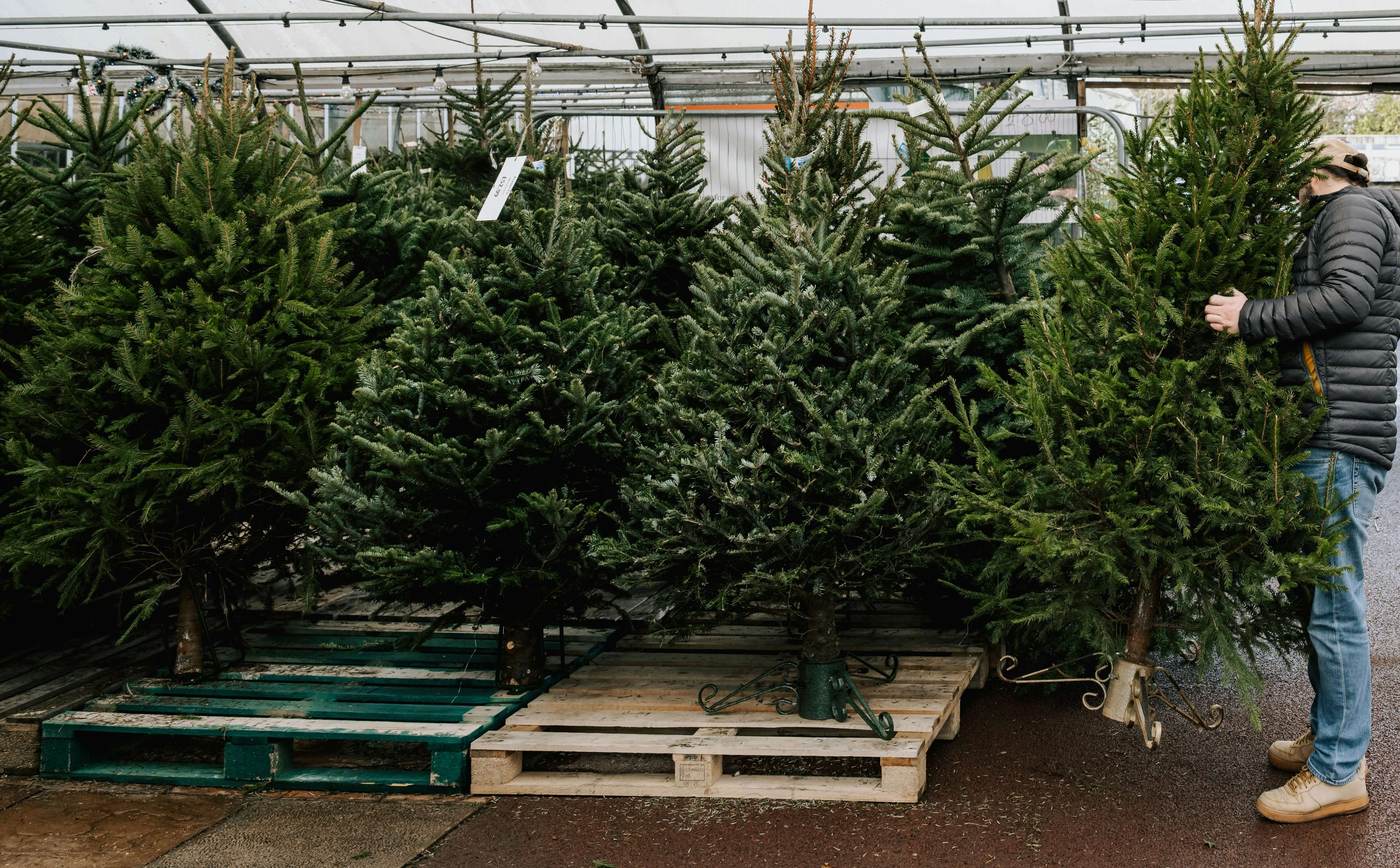
Freshness matters more than finding a geometrically perfect tree. Look for a tree with:
- Healthy color
- Flexible needles
- Needles that remain attached when branches are gently handled
- Supple outer branches
- A trunk that isn't excessively dry
Some needle loss from the interior can be normal, depending on the species.
What you don't want is a tree that showers the ground with healthy outer needles when you touch it.
If you're choosing between a slightly imperfect fresh tree and a perfectly shaped tree already drying out, take the fresh one.
You can rotate the imperfect side toward the wall. Walls are famously nonjudgmental.
3. Ask When the Tree Was Cut
If you're buying from a tree lot, ask what you can about the tree's origin and when it was harvested.
If you're cutting your own tree at a choose-and-cut farm, freshness is easier to establish.
Either way, remember:
A cut Christmas tree has already begun losing moisture. You aren't keeping it alive in the same sense as a potted living tree.
You're helping a cut tree remain hydrated and fresh for as long as reasonably possible.
This distinction will save you from Googling “Christmas tree plant food emergency” at 11 p.m.
4. Transport the Tree Carefully
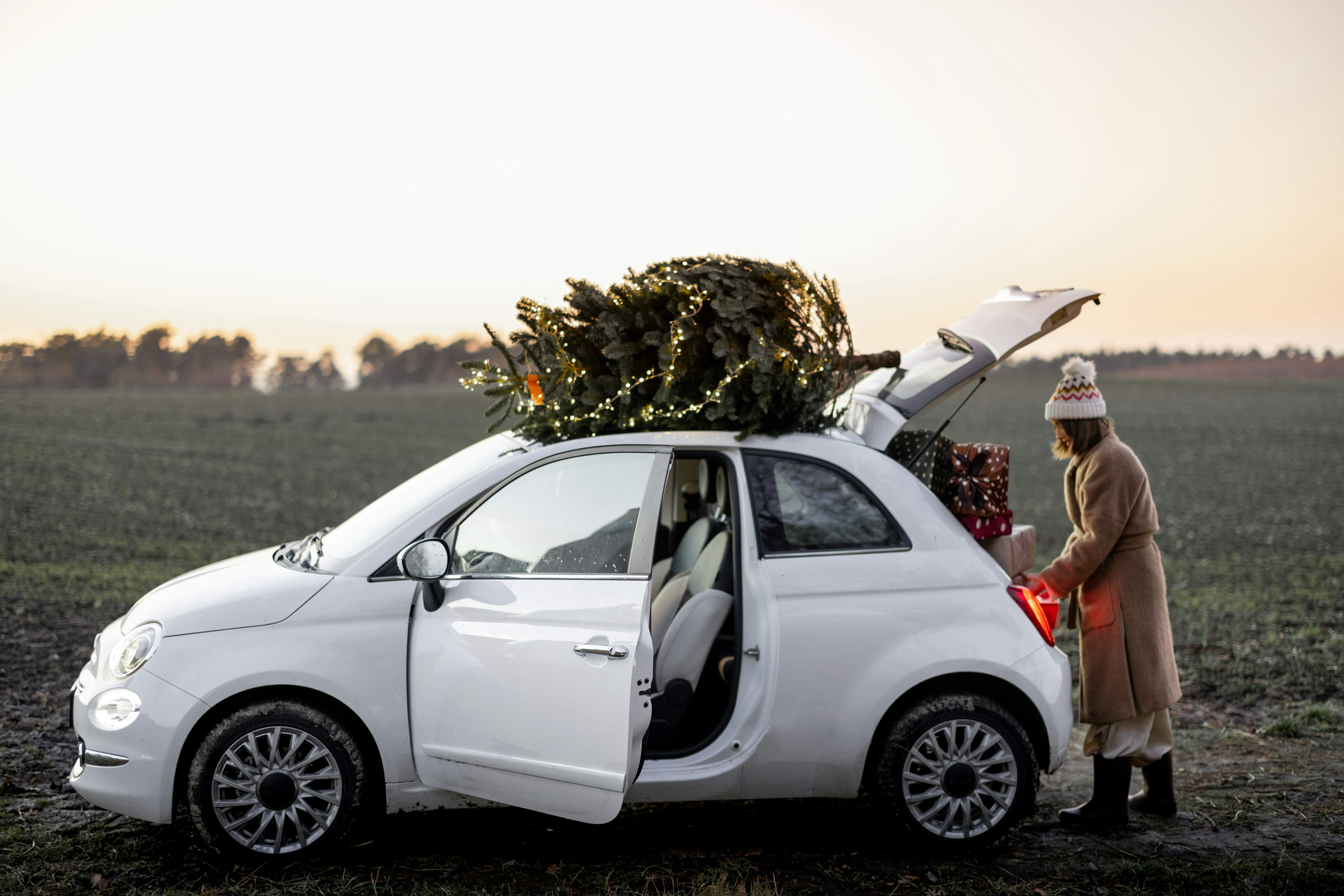
Secure the tree properly for the trip home.
If you're transporting it on top of a vehicle, have it securely tied according to safe transport practices.
Tree lots may net or wrap the tree, which makes transport easier and can help protect branches.
Don't count on one heroic piece of twine and optimism. The tree should arrive at your house at the same time you do.
5. Make a Fresh Cut Before Putting It in the Stand
If the tree wasn't freshly cut immediately before setup, remove a small section from the bottom of the trunk before placing it in water. A fresh, straight cut helps expose wood that can take up water.
Don't whittle the trunk down to make it fit the stand. Don't cut it at an angle. Don't drill holes into it hoping to improve water uptake.
Use a stand large enough for the trunk. The trunk is not the part that needs customizing. The stand is the part that needs to fit.
6. Get the Tree Into Water Promptly
Once you've made a fresh cut, get the tree into its water-holding stand promptly.
Don't make the cut and then leave the tree lying in the driveway for the afternoon while you reorganize the living room.
The whole point of the fresh cut is to help the tree take up water. Give it water.
Christmas tree care is refreshingly literal in this respect.
7. Use a Stand That Holds Plenty of Water
A good Christmas tree stand should:
- Fit the trunk
- Hold the tree securely
- Have a substantial water reservoir
- Allow you to check and refill the water easily
That last point is more important than it sounds.
If checking the water requires crawling under the tree, moving gifts, removing the tree skirt, and performing minor orthopedic maneuvers, you are less likely to do it.
A tree stand that makes the job easier: The KRINNER Christmas Tree Genie Large uses a foot-pedal cable system to secure a real tree and includes a water reservoir.
It's worth considering if you'd rather not spend Christmas tree setup lying on the floor, tightening screws under the branches.
8. Never Let the Water Level Drop Below the Cut End of the Trunk
This is the big one. The cut end of the trunk needs continuous access to water.
Check the reservoir every day, particularly during the first several days when a fresh tree may take up a surprising amount of water.
Don't assume there's enough because you filled it yesterday. Look. If the water level drops below the trunk, water uptake can become compromised.
This is not the household task to delegate to:
“I thought somebody else was doing that."
9. Expect the Tree to Drink a Lot at First
A fresh tree can be thirsty, especially soon after setup. That's normal.
The amount varies with:
- Tree size
- Species
- Freshness
- Indoor temperature
- Environmental conditions
This is another reason a generous reservoir is helpful.
You want to be mildly impressed by how much water the tree drank. You do not want to discover an empty stand two days later.
Make daily watering easier: A long Christmas tree watering funnel lets you refill the reservoir without crawling under the branches—particularly useful once the tree is decorated and reaching the stand becomes an exercise in ornament avoidance.
10. Plain Water Is Usually What the Tree Needs
You may encounter recipes involving:
Sugar.
Corn syrup.
Aspirin.
Soda.
Bleach.
Vodka.
Various substances from the refrigerator that apparently became arboriculture supplies when December arrived.
Skip the chemistry experiment.
For a cut Christmas tree, the important thing is maintaining an adequate supply of clean water unless your tree supplier gives you specific evidence-based instructions otherwise.
Your Christmas tree does not need a cocktail. It needs a drink. There is a difference.
11. Keep the Tree Away From Heat Sources
Heat can accelerate drying. Position your tree away from:
- Fireplaces
- Heating vents
- Radiators
- Space heaters
- Other significant heat sources
A Christmas tree beside a roaring fireplace looks beautiful in photographs. The tree itself would prefer a different seating assignment.
The farther you can reasonably keep a cut tree from drying heat, the better.
12. Think About Sunlight Too
Strong direct sunlight through a window can warm a tree.
If you have a choice between a cooler location and one that gets intense afternoon sun, the cooler location may help reduce drying.
This doesn't mean the tree needs to live in darkness. It means you shouldn't accidentally install it in a greenhouse.
13. Lower the Room Temperature When Practical
You do not need to turn your living room into a walk-in refrigerator. But excessively warm indoor temperatures can speed up drying.
If you normally keep the house very warm, a slightly cooler room may be friendlier to a cut tree.
Conveniently, humans wearing Christmas sweaters may also survive.
14. Let the Tree Settle Before Final Decorating
Once the tree is upright and watered, give the branches some time to relax if the tree was tightly wrapped or netted.
Then assess its actual shape. Rotate it. Find the best side. Make minor adjustments.
This is the stage when the tree reveals that the side you admired at the lot has an enormous hole you somehow failed to notice.
Turn that side toward the wall. Problem solved. No tree therapy required.
15. Make Sure the Tree Is Stable
Before decorating, confirm that the tree is secure in the stand. Gently test it. If it feels unstable, fix the problem now.
Do not assume 200 ornaments will somehow improve structural integrity.
If you have young children or pets—or simply an unusually adventurous household—consider whether your setup needs additional stabilization.
The tree should not be one tail wag away from becoming horizontal.
16. Inspect Holiday Lights Before They Go on the Tree
Before wrapping lights around branches, inspect them. Look for:
- Damaged cords
- Cracked or broken sockets
- Loose connections
- Other obvious damage
Use lights intended for the location, and follow the manufacturer’s instructions.
Once you've woven lights through an eight-foot tree and covered them with ornaments, finding a bad strand becomes much more annoying.
Test first. Decorate second. Complain about the one section that stopped working on December 22 later.
17. Consider LED Lights
LED Christmas lights generally use less energy and produce less heat than traditional incandescent holiday lights.
They're a practical choice for a cut tree.
Regardless of the light type, use products as directed and don't overload electrical outlets or connect more strings than the manufacturer permits.
“It's Christmas” is not an electrical specification.
18. Turn Tree Lights Off When You're Away or Asleep
Don't leave Christmas tree lights on unattended. Turn them off before you leave home and before you go to bed.
This is both a sensible safety habit and one fewer source of heat around the tree.
If remembering is the problem, an appropriate timer or smart plug used according to its instructions can simplify the routine.
Christmas doesn't become less festive while you're asleep.
19. Keep Candles Away From the Tree
Never place burning candles on or near a Christmas tree.
Not “just for dinner.”
Not “just for the photo.”
Not because the candles are tiny.
Use flameless candles if you want candlelight near the tree.
Real tree.
Fake flame.
Excellent arrangement.
20. Keep the Tree Away From Major Traffic Paths
Don't put the tree where people constantly have to squeeze around it. Avoid blocking:
- Doorways
- Exits
- Main walkways
- Stairs
Repeated bumping is annoying for the tree and everyone else. And emergency exits need to remain usable.
Your Christmas tree should be a focal point. Not a traffic hazard.
21. Use a Tree Skirt Without Hiding the Water Problem
Tree skirts look lovely. They also have an unfortunate ability to make the stand disappear from human consciousness.
Arrange the skirt so you can still easily reach and check the water reservoir.
If necessary, create an easy-access opening at the back. You should not need to dismantle Bethlehem every evening to add water.
22. Keep Pets in Mind
Christmas trees are extremely interesting to pets. They smell different. They contain dangling objects. They suddenly occupy territory that belonged to the cat yesterday.
Secure the tree appropriately. Keep fragile ornaments away from lower branches if needed. Watch electrical cords.
Don't let pets drink from the tree stand, especially if you've added anything to the water.
Remember that tinsel, ribbons, hooks, and small decorations can be hazards if swallowed.
The cat does not understand that the tree is decorative. The cat believes you've finally made a good decision. Plan accordingly.
23. Decorate With Young Children in Mind
If small children are in the house, think strategically about the lower third of the tree.
Consider keeping these higher:
- Fragile ornaments
- Small removable decorations
- Sharp hooks
- Sentimental ornaments
- Anything easily swallowed
Use secure, child-appropriate decorations lower down if desired.
You don't need to spend December saying “DON'T TOUCH THE TREE” every 90 seconds. Design the tree for the household that actually lives there.
24. Watch for Increasing Needle Loss
Some needle shedding is normal. But increasing dryness and heavy shedding deserve attention.
Check:
- Outer needles
- Branch flexibility
- Overall appearance
- Water level
If the tree begins losing large numbers of needles and becoming brittle despite proper watering, it may be reaching the end of its useful indoor life.
A Christmas tree isn't safer just because December 25 hasn't happened yet.
Monitor the tree, not merely the calendar.
25. Take a Dry Tree Down
This is the part nobody enjoys. Eventually, a real tree needs to leave.
If the tree becomes substantially dry and brittle, don't keep it indoors simply because you intended to leave Christmas decorations up another week.
A dried-out tree presents a much greater fire concern than a fresh, well-watered one. Take it down.
Christmas can continue without the tree. There are probably still six decorative pillows explaining what season it is.
How Often Should You Water a Christmas Tree?
That's more useful than prescribing a fixed amount or schedule. A tree's water use varies.
In the first few days after setup, it may use considerably more water than later. Make checking the stand part of your daily routine:
Morning coffee.
Feed pet.
Check tree.
Wonder why everyone leaves glasses in the living room.
Continue day.
The critical point is keeping the cut trunk in contact with water.
Can You Revive a Dry Christmas Tree?
If the tree has simply experienced a brief watering lapse and is otherwise still in good condition, restore the water supply promptly and monitor it.
But a tree that has become extensively dry, brittle, and heavily shedding cannot reliably be restored to its original fresh condition.
Prevention is far more effective than rescue. That's why daily water checks matter.
Once your tree makes a crunchy noise when you walk past it, negotiations are nearly over.
How to Keep a Christmas Tree Fresh Longer
If you want the shortest possible answer, concentrate on these five things.
1. Buy a fresh tree.
Starting condition matters.
2. Make a fresh cut.
Do it when needed, immediately before setup.
3. Get the tree into water promptly.
Don't let a newly cut trunk sit around.
4. Never let the stand run dry.
Check it daily.
5. Keep the tree away from heat.
Especially fireplaces, vents, and space heaters.
There's no secret sixth step involving lemon-lime soda. Sorry.
The First 24 Hours: Christmas Tree Setup Checklist
The first day matters.
Before bringing it inside
- Measure the room
- Check the stand
- Make a fresh trunk cut if needed
- Decide exactly where the tree is going
During setup
- Put the trunk into water promptly
- Make sure the tree is stable
- Fill the reservoir
- Confirm access for future watering
- Keep it away from heat
- Keep exits and walkways clear
Before decorating
- Let branches settle
- Rotate the best side forward
- Test stability again
- Inspect lights
- Consider children and pets
Then decorate. Preferably after the person under the tree has emerged.
Your Daily 60-Second Christmas Tree Check
Once the tree is decorated, maintenance should be easy.
Every day:
Check the water.
Then glance at:
- Needle condition
- Branch dryness
- Tree stability
- Lights and cords
- Nearby heat sources
That's it. About a minute.
You do not need a Christmas Tree Maintenance Binder.
Before You Leave Home for Holiday Travel
If you're going away during the holidays:
- Turn tree lights off
- Check the tree's condition
- Consider how its water will be maintained
- Don't leave a substantially dry tree standing indoors
If nobody will be available to maintain the tree for an extended absence, factor that into when you buy it and how long you keep it.
The tree doesn't know you'll be back Sunday.
Christmas Tree Fire Safety
The most important fire-safety measures are straightforward:
- Start with a fresh tree
- Keep it watered
- Keep it away from significant heat sources
- Keep open flames away
- Inspect electrical decorations
- Follow light manufacturers' instructions
- Turn lights off when you're away or asleep
- Keep exits clear
- Remove the tree when it becomes dry
A well-watered tree and a severely dried tree behave very differently around ignition sources.
So watering isn't merely about appearance.
It's an important part of Christmas tree safety.
What Not to Do With a Real Christmas Tree
Don't:
- Buy an obviously dried-out tree
- Whittle the trunk to force it into a small stand
- Let the reservoir repeatedly run dry
- Put the tree beside a space heater
- Place open flames nearby
- Use obviously damaged light strands
- Block exits
- Ignore heavy needle loss
- Keep a severely dried tree indefinitely
- Assume more additives compensate for inadequate water
And please don't spray random household products onto the tree because social media promised they'll make it last until Valentine's Day.
February does not need your Christmas tree.
When Should You Take the Christmas Tree Down?
There isn't one correct date. Some families take the tree down immediately after Christmas. Some wait until New Year's.
Some observe traditions that keep Christmas decorations up longer.
From a tree-care perspective, the deciding factor should also include the tree's condition. If it remains adequately hydrated and in good condition, you have more flexibility.
If it becomes significantly dry and brittle, take it down.
Your family tradition doesn't require preserving a fire hazard. The ornaments will understand.
Removing the Tree Without Covering the House in Needles
The final challenge.
First: Remove ornaments, lights, and other decorations.
Then remove as much water from the stand as practical before moving the tree.
Consider wrapping or bagging the tree, depending on your local disposal method, before carrying it through the house.
Clear the route to the door. Then move. Do not drag the tree through six rooms while stopping to reorganize furniture.
Direct route. Outside. Vacuum afterward.
Some needles will remain. This is not a reflection on your housekeeping. It is the tree's security deposit.
What to Do With the Tree After Christmas
Check your local Christmas tree recycling or disposal program.
Depending on where you live, communities may:
- Collect trees curbside
- Offer drop-off recycling
- Turn trees into mulch
- Require trees to be cut into specific sizes
- Have designated collection dates
Remove:
- Ornaments
- Lights
- Tinsel
- Tree stands
- Other non-organic decorations
before recycling, where required.
Don't assume the regular trash procedure applies.
A five-minute check of local rules can save you from watching your tree remain at the curb long enough to become neighborhood infrastructure.
Real Christmas Tree Care Checklist
When Buying
- Measure your space
- Check stand size
- Look for a fresh tree
- Check needle retention
- Check branch flexibility
When Setting Up
- Make a fresh trunk cut if needed
- Put tree in water promptly
- Use a properly sized stand
- Fill reservoir
- Check stability
- Keep away from heat
- Keep exits clear
Every Day
- Check water
- Check needles
- Check dryness
- Check stability
- Check lights and cords
- Turn lights off when unattended
When It's Time to Go
- Remove a substantially dry tree
- Remove decorations
- Empty stand
- Check local recycling/disposal rules
- Carry tree directly outside
- Vacuum needles
- Find needles again in April
The last step is automatic.
The Bottom Line
A real Christmas tree doesn't need complicated treatments.
It needs you to get the fundamentals right.
Choose a fresh tree.
Make a fresh cut when needed.
Get it into a properly sized water-holding stand promptly.
Check the water every single day.
Keep it away from fireplaces, heating vents, space heaters, and other major heat sources.
Use electrical decorations properly.
Keep flames away.
And pay attention as the tree ages.
A real Christmas tree will eventually dry out. That's not something you can prevent indefinitely.
The goal isn't to keep it alive until spring. The goal is to keep it fresh, beautiful, and appropriately cared for while it's in your home.
Then, when it's clearly finished, take it down.
Preferably before it reaches the stage where removing one ornament sends 600 needles to the floor at once.
At that point, the tree has spoken.
Christmas is over.
Get the vacuum.
Keep Going
For wreaths, centerpieces and cut evergreen branches, see Keeping Holiday Greenery Fresh.
For long strands of evergreen around mantels, doors and staircases, see Keeping Holiday Garland Fresh.
For poinsettias, Christmas cactus, amaryllis and other living plants, see Christmas Plant Care Tips.
And for getting the rest of the house through December, see Easy Christmas Holiday Tips.
- Clean Home
- Backyard & Garden
- Christmas Tree Tips