Chores for Kids by Age:
What Kids Can Really Handle
If you've ever asked a child to clean a bedroom and returned twenty minutes later to find one sock relocated and the child deeply involved in something unrelated, you already know:
“Clean your room” is not a chore. It's a project description.
Kids do better with household chores when they know exactly what they're expected to do—and when the job actually matches what they're capable of doing.
A four-year-old can put toys in a basket. That same four-year-old probably shouldn't be entrusted with oven cleaner, a ladder or your grandmother's crystal.
The goal isn't free household labor, tempting though that may occasionally sound.
It's to gradually teach children to care for their belongings, contribute to the household, and eventually become adults who know towels don't magically wash themselves.
Here are practical chores for kids by age, from preschool through the teenage years.
Chores for Ages 3–5
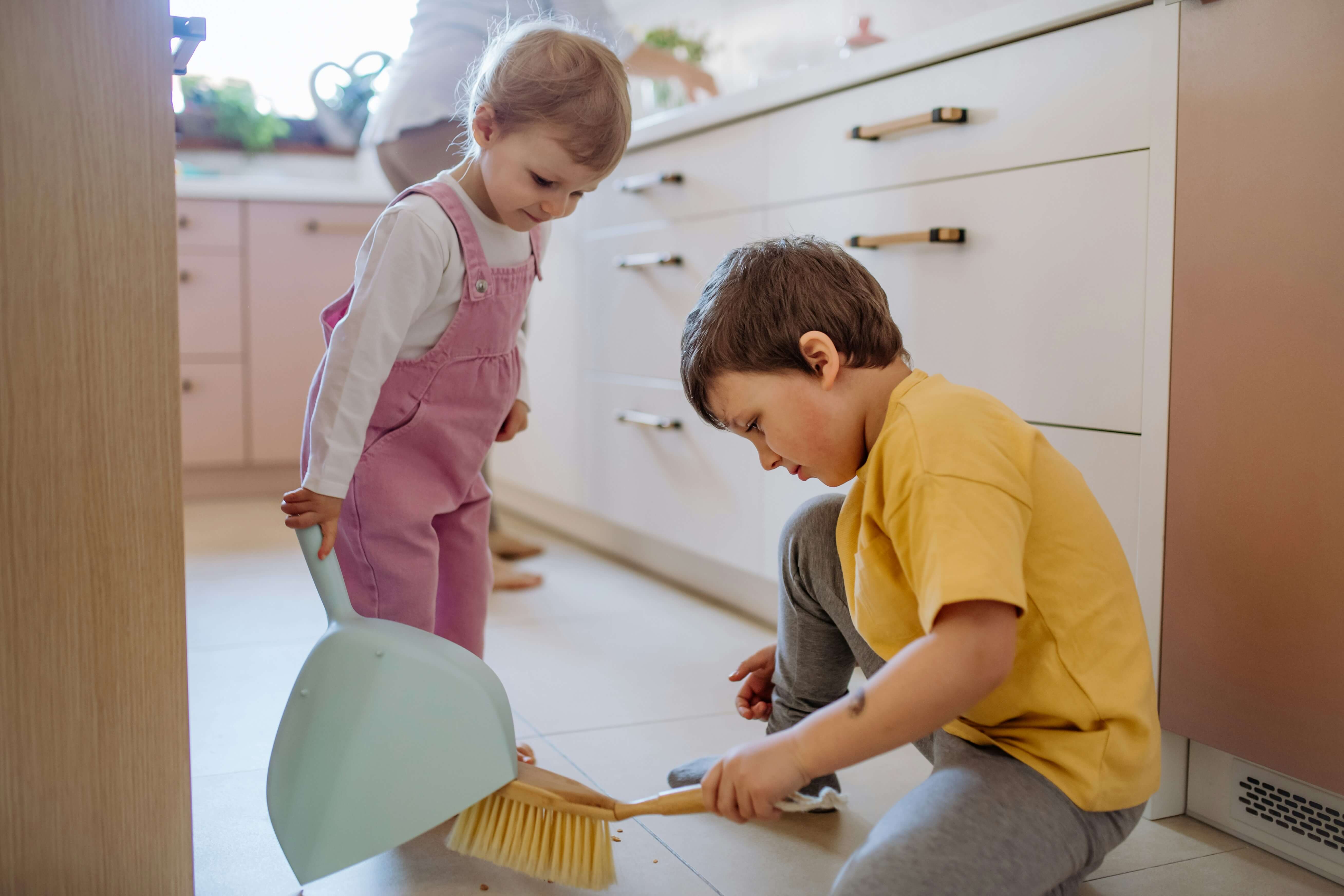
Preschoolers usually love helping—at least until they discover we'll keep asking them to do it for the next fifteen years.
At this age, concentrate on simple jobs with a clear beginning and end. You'll still need to supervise and sometimes redo things later.
That's fine. You're teaching the habit, not hiring a housekeeper.
Age-appropriate chores for preschoolers
Kids ages 3 to 5 can often:
- Put toys into bins or baskets
- Put books back on a low shelf
- Place dirty clothes in the hamper
- Carry unbreakable dishes to the table
- Put napkins on the table
- Match clean socks
- Help put folded clothes into drawers
- Wipe small spills with help
- Put shoes and jackets in their designated places
- Help feed a pet with supervision
- Help make the bed
- Help pick up leaves or small debris outside
Keep instructions specific.
Instead of saying, “Clean up the living room,” try, “Put the blocks in this basket.”
One is manageable. The other sounds suspiciously like Saturday.
Chores for Ages 6–8
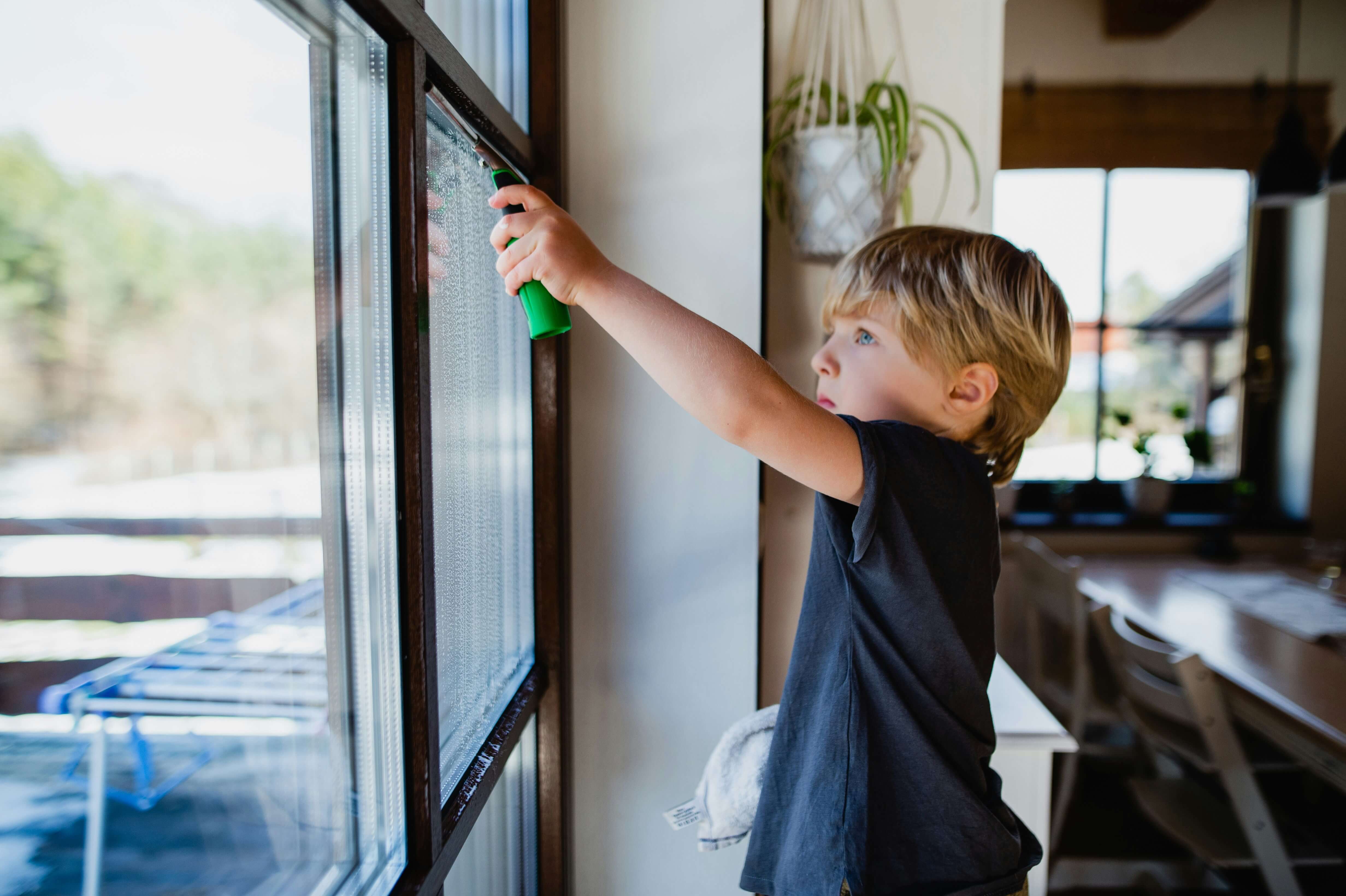
Elementary-school-age kids can begin taking responsibility for recurring household jobs rather than simply “helping.”
They're also old enough to learn that putting something away takes approximately the same amount of time whether a parent reminds them once or fourteen times.
Age-appropriate chores for ages 6–8
Depending on the child, they can often:
- Make their bed
- Keep their bedroom floor picked up
- Put dirty laundry in the hamper
- Sort laundry by color
- Fold simple clothing and towels
- Set and clear the table
- Load nonbreakable dishes into the dishwasher
- Unload safe dishwasher items
- Wipe the table after meals
- Sweep small areas
- Use a handheld vacuum
- Empty small wastebaskets
- Help put groceries away
- Water plants
- Feed pets
- Help prepare simple snacks
- Put away their own school supplies
This is a good age to introduce daily responsibilities rather than assigning chores only when the house has reached emergency status.
A child might make the bed each morning, clear dishes after dinner, and spend five minutes putting away belongings before bedtime.
Small jobs done consistently are more useful than a giant Saturday chore list everyone dreads.
Chores for Ages 9–12
By late elementary and middle school, kids can usually handle multi-step chores and use basic household equipment with instruction.
This is where “helping” starts turning into genuine household responsibility.
Age-appropriate chores for ages 9–12
Kids in this age group can often:
- Change bed linens
- Make the bed completely
- Sort, fold, and put away laundry
- Learn to operate the washer and dryer
- Load and unload the dishwasher
- Wash dishes by hand
- Wipe kitchen counters
- Sweep floors
- Vacuum rooms
- Mop appropriate flooring
- Clean bathroom sinks and mirrors
- Clean the toilet with instructions
- Take out household trash
- Bring trash and recycling bins in or out
- Help prepare simple meals
- Make school lunches
- Put groceries away
- Care for pets
- Rake leaves
- Help wash the car
- Keep their bedroom reasonably organized
This is also a good time to teach the whole job.
“Take out the trash” doesn't end when the bag reaches the garage. The trash can needs a new liner.
Laundry isn't finished because the dryer beeped. Clean clothes need folding and putting away. These small final steps turn a chore into a life skill.
Chores for Ages 13–15

Teenagers can do most routine household chores once they've been shown how.
Whether they are enthusiastic about this development is a separate matter.
At this age, chores can expand beyond cleaning to include cooking, laundry, household organization, and basic home maintenance.
Age-appropriate chores for young teens
Ages 13 to 15 can generally learn to:
- Do their own laundry from start to finish
- Change and wash bed linens
- Vacuum and mop floors
- Clean a bathroom
- Clean up the kitchen after meals
- Load and unload the dishwasher
- Hand-wash appropriate dishes and cookware
- Prepare simple family meals
- Make grocery lists
- Help shop for groceries
- Take responsibility for trash and recycling
- Organize their bedroom and personal belongings
- Care independently for family pets
- Wash and vacuum the family car
- Perform basic yard work
- Help with seasonal household jobs
- Keep track of personal school and activity supplies
If a teenager can navigate three apps simultaneously while watching a video and texting a friend, learning how the washing machine works is probably within reach.
Chores for Ages 16–18
Older teenagers are approaching independence, which changes the purpose of household chores.
At this stage, you're not simply trying to get the kitchen cleaned. You're making sure they can eventually live somewhere without creating a public-health incident.
Before leaving home, teens should ideally know how to handle the routine jobs required to maintain one.
Chores and household skills for older teens
Teens ages 16 to 18 can learn to:
- Handle their own laundry completely
- Clean a kitchen
- Deep-clean a bathroom
- Vacuum and mop
- Change bedding
- Prepare several complete meals
- Plan meals and make a grocery list
- Grocery shop within a budget
- Properly store food
- Clean out the refrigerator
- Take responsibility for trash and recycling
- Organize closets and storage areas
- Perform basic household maintenance
- Handle routine yardwork
- Wash and clean a car
- Keep track of household supplies
- Help with younger siblings when appropriate
- Manage their own bedroom and personal spaces
The question becomes less “What chores can my teenager do?” and more “What does my teenager need to know before living independently?”
That's a much more useful standard.
How Many Chores Should Kids Have?
There isn't a magic number. Three manageable chores performed consistently can teach more responsibility than a twelve-item chart that gets abandoned by Thursday.
Start with a few jobs that fit naturally into family life.
For example, a child might have:
- One personal responsibility: Make the bed.
- One family responsibility: Clear the dinner table.
- One periodic responsibility: Empty bedroom trash on Friday.
Once those become routine, add another. The objective is participation, not maximum chore capacity.
Daily Chores vs. Weekly Chores
Separating daily chores from weekly chores makes expectations much clearer.
Daily chores are usually quick tasks connected to normal routines: making the bed, putting clothes in the hamper, clearing dishes, and picking up personal belongings.
Weekly chores take a little longer: changing sheets, vacuuming, cleaning a bathroom, doing laundry, or helping with yard work.
This also prevents Saturday morning from becoming the household equivalent of an emergency cleanup operation.
Make Chores Specific
One of the easiest ways to improve a family chore system is to eliminate vague instructions.
“Clean your room” can mean approximately 47 different things.
Try:
“Put dirty clothes in the hamper, put books on the shelf, throw away trash, and clear everything off the floor.”
Now the child knows when the job is finished.
The same principle works throughout the house.
Instead of “clean the bathroom,” define the job: wipe the sink and counter, clean the mirror, replace the hand towel, and empty the trash.
Specific jobs are easier to teach, easier to complete, and much harder to argue were technically done.
Teach the Chore Before Expecting Independence
Knowing that a bathroom needs cleaning and knowing how to clean one are two different things.
When introducing a new chore:
- Do it together. Show the child exactly what the finished job looks like.
- Let the child do it while you supervise. Correct technique rather than simply redoing the job yourself.
- Gradually remove supervision. Once the child can handle it safely, make it their responsibility.
- Keep expectations realistic. A ten-year-old's folded towels may not resemble a department-store display. The towels are still folded.
If you redo every imperfect chore immediately, children quickly learn that there's little point in doing it themselves.
Good enough really can be good enough.
Chore Safety Matters
Age ranges are guidelines, not guarantees. Children mature at different rates, and some household jobs require closer supervision than others.
Be particularly careful with:
- Cleaning chemicals
- Hot appliances and cookware
- Sharp knives
- Garbage containing sharp objects
- Ladders and step stools
- Heavy lifting
- Lawn and power equipment
- Pet-care tasks involving unfamiliar animals
Read product labels and keep hazardous cleaning products out of reach of younger children.
A chore isn't age-appropriate if the child can't perform it safely.
Should Kids Get Paid for Chores?
Families handle allowances differently, and not every chore needs to become a financial transaction.
One practical approach is to separate family responsibilities from extra paid jobs.
Making the bed, putting away personal belongings, or clearing your own dinner plate can simply be part of living in a household.
A larger optional job—washing the car, tackling an extra organizing project, or doing additional yard work—might earn money.
That distinction teaches two useful lessons at once: everyone contributes to the household, and additional work can have financial value.
The Real Reason Kids Need Chores
Yes, chores make family life easier.
Eventually.
At first, teaching a child to do something can take considerably longer than doing it yourself. You could have unloaded the dishwasher twice in the time it took to explain where the salad bowl lives.
But speed isn't the point.
Children who participate in household work learn how a home functions. They learn that messes get cleaned, food gets prepared, clothing gets washed, and belongings have to be maintained.
They also learn that these jobs don't mysteriously belong to one person.
The long-term goal isn't a child who follows a chore chart perfectly.
It's a young adult who leaves home knowing how to cook something, wash something, clean something and—this one is ambitious—replace the toilet-paper roll.
That's a pretty useful start.
Keep Going
For more practical ways to divide household responsibilities, visit our Family Life Guide.
For room-by-room cleaning routines the whole family can follow, visit our House Cleaning Guide.
- Clean Home
- Family Life
- House Chores for Kids