How to Organize Clothes So You Can Find What You Own
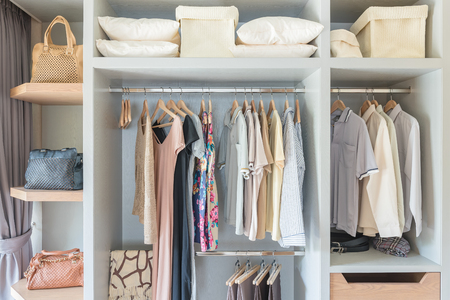
If getting dressed requires digging through three drawers, moving six hangers, and wondering where your favorite black pants went, your wardrobe probably doesn't need more clothes.
It needs a better system.
Organizing clothes is less about making your closet look pretty and more about making it easy to see, reach, and put away what you already own.
Because if the system only looks good for three days and then collapses into a chair full of jeans, it wasn't much of a system.
The goal is simple:
You should be able to find what you want, put it away easily, and know what you already own before buying more.
Start by Decluttering What You Don't Wear
Before you organize anything, reduce the amount you're trying to organize.
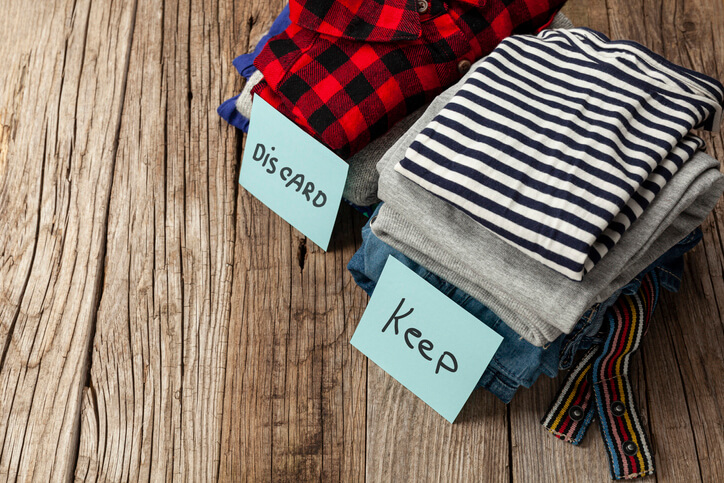
Go through your clothes and sort them into four groups:
Keep. Donate. Sell. Toss.
Ask:
- Do I wear this?
- Does it fit?
- Is it comfortable?
- Is it in good condition?
- Does it suit my actual life?
- Would I buy it again today?
If you answered no to most of those, it may be taking up valuable closet space for no good reason.
Don't organize clothing you don't even want.
That just creates a very efficient storage system for things you never wear.
Need help making those decisions? See How to Declutter Your Home Without Getting Overwhelmed →
Group Clothes by Type First
Once you've decided what stays, sort clothes into broad categories.
For example:
- Shirts.
- Pants.
- Jeans.
- Dresses.
- Skirts.
- Jackets.
- Sweaters.
- Workout clothes.
- Sleepwear.
- Underwear.
- Socks.
Grouping like with like makes it much easier to see what you have. It also reveals things your closet was hiding.
You may discover you own twelve nearly identical black shirts. This is useful information. Possibly expensive information.
But useful.
Decide What Should Hang
Hang clothes that benefit from staying wrinkle-free or are easier to see on hangers.
Good candidates include:
- Dresses.
- Blouses.
- Jackets.
- Dress pants.
- Skirts.
- Button-down shirts.
- Delicate garments that hold their shape well on hangers.
Use sturdy hangers that fit the garment.
Avoid overcrowding. If you have to wrestle every hanger sideways just to remove one shirt, the closet is too full.
A closet should not function like rush-hour traffic.
Decide What Should Be Folded
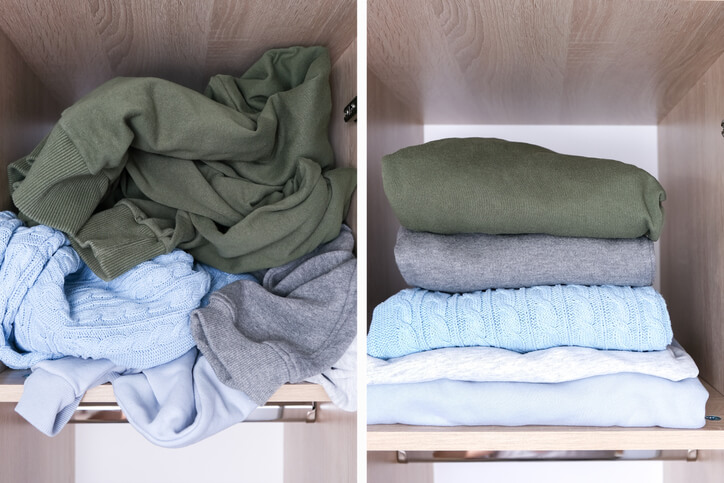
Fold items that don't need to hang or may stretch out if they do.
That often includes:
- T-shirts.
- Sweaters.
- Jeans.
- Sweatshirts.
- Workout clothes.
- Sleepwear.
- Casual pants.
Heavy knits are especially good candidates for folding because hanging can distort their shape.
Store folded items where you can see them.
If you stack everything six shirts high, the bottom item disappears until next winter.
Organize Hanging Clothes in a Way That Makes Sense to You
There is no single correct closet order.
Choose the system that helps you get dressed fastest.
You might organize hanging clothes:
- By garment type.
- By color.
- By work and casual.
- By season.
- By outfit.
For most people, garment type is easiest.
Keep shirts together.
Pants together.
Dresses together.
Then sort by color within each category if that helps. The point isn't to make the closet look like a boutique.
It's to stop spending ten minutes looking for one thing you know is in there somewhere.
Put the Clothes You Wear Most Where You Can Reach Them
Use prime closet space for clothes you actually wear.
Keep frequently worn items at eye level and within easy reach.
Move less-used items:
- Higher.
- Lower.
- Toward the back.
- Into seasonal storage.
Don't give your best shelf to the formal dress you wear once every three years while your everyday jeans are wedged behind a suitcase.
Storage should reflect frequency of use.
Use Drawer Space by Category
Don't mix everything together.
Give drawers clear jobs.
For example:
Drawer 1: underwear and socks.
Drawer 2: T-shirts.
Drawer 3: workout clothes.
Drawer 4: sleepwear.
This reduces searching and makes putting laundry away much faster.
If two categories share one drawer, keep them separated with simple dividers or zones.
You do not need an elaborate plastic grid system unless you genuinely like one.
A drawer can survive without an engineering degree.
File-Fold When It Helps
If deep stacks cause clothes to disappear, try folding items vertically so you can see each one at a glance.
This works particularly well for:
- T-shirts.
- Leggings.
- Workout clothes.
- Pajamas.
You don't need to fold every category this way.
Use it where it improves visibility.
Organization should solve a problem.
It shouldn't become a hobby unless you want it to.
Keep Socks and Underwear Simple
Small clothing items can quickly become chaos.
Use:
- Drawer dividers.
- Small bins.
- Separate sections.
Keep categories broad. You do not need six subdivisions for socks.
Regular socks.
Athletic socks.
Specialty socks.
Done.
If you spend more time maintaining the organizing system than getting dressed, simplify it.
Don't Keep Every Shoe in the Bedroom Closet
Shoes take up a surprising amount of space.
Keep frequently worn shoes accessible.
Store occasional or seasonal shoes elsewhere if necessary.
Options include:
- Shoe shelves.
- Over-the-door organizers.
- Clear boxes.
- Low bins.
- Entryway storage for daily shoes.
The best shoe system keeps pairs together and lets you see what you own.
If you have to move four boxes to find one pair, the storage is working harder than it should.
Give Accessories Defined Homes
Belts, scarves, hats, jewelry, and handbags can quickly create visual clutter.
Give each category one clear place.
For example:
- Belts on hooks.
- Scarves on one hanger or in a drawer.
- Handbags on a shelf.
- Jewelry in a small organizer.
- Hats on hooks or one shelf.
Avoid tossing accessories into a general "miscellaneous" bin.
Miscellaneous is often just another word for things I'm postponing decisions about.
Use the Closet Door
Closet doors can provide useful storage without taking up floor space.
You might use them for:
- Shoes.
- Scarves.
- Belts.
- Small handbags.
- Accessories.
Just don't cover the door with so much stuff that opening it becomes an athletic event.
Vertical storage is helpful.
Overloading every available surface is not.
Make Better Use of Closet Rods
If you have many shorter hanging clothes, a second rod can create more usable space.
For example:
Top rod:
- Shirts.
- Jackets.
Bottom rod:
- Pants folded over hangers.
- Skirts.
This can work well if your closet is tall enough.
But don't add hardware simply because an organizing article says you should.
Measure first.
Look at what you actually own.
Then decide whether another rod solves a real problem.
Use Shelves Intentionally
Shelves work well for:
- Sweaters.
- Jeans.
- Handbags.
- Shoes.
- Bins for small accessories.
Avoid creating tall, unstable stacks.
If a pile repeatedly falls over, the shelf needs fewer items or a divider.
Not stronger optimism.
Seasonal Clothes Don't Need Prime Space
If you live somewhere with seasonal weather, rotate your wardrobe.
Store off-season items in:
- Labeled bins.
- High closet shelves.
- Under-bed storage.
- Another closet.
Before storing them, wash or clean items appropriately and make sure they're completely dry.
Label the container.
Six months from now, "winter clothes" is much more helpful than "stuff."
Keep Special-Occasion Clothes Separate
Formal wear doesn't need to crowd everyday clothing.
Store special-occasion garments together.
Use garment bags when appropriate for the fabric.
Keep shoes and accessories for those outfits nearby if that makes getting ready easier.
Your closet should prioritize everyday life.
The sequined dress can wait politely in the back.
Don't Buy Closet Organizers Too Soon
This is one of the easiest mistakes to make.
You see a messy closet.
You buy bins.
Then shelves.
Then shoe racks.
Then drawer organizers.
Now you have the same amount of clothing plus a pile of organizing products.
Declutter first.
Group what's left.
Then identify the actual storage problem.
Buy something only if it solves that problem.
Containers should serve your wardrobe.
Your wardrobe should not exist to justify the containers.
Label Only When It Helps
Labels can be useful for:
- Seasonal bins.
- Kids' clothes.
- Shared closets.
- Clothing sizes.
- Special categories.
You do not need labels for obvious things.
A bin full of socks probably doesn't need a laminated sign that says SOCKS.
But if several people share storage, labels can reduce confusion and speed up putting things away.
Make Laundry Put-Away Easy
A clothing system succeeds or fails based on how laundry comes back.
Ask yourself:
Can I put clean clothes away quickly? If not, simplify.
Maybe drawers are too full.
Maybe hangers are packed too tightly.
Maybe the closet has too many categories.
Maybe seasonal clothes are taking up prime space.
Clean laundry shouldn't spend three days in a basket because the closet requires a negotiation.
Leave Some Empty Space
This may be the most useful closet-organizing tip.
Don't fill every inch.
Leave room between hangers.
Leave part of a shelf open.
Leave some drawer space.
A storage system works much better when things can go in and out easily.
If every drawer requires compression and every hanger requires force, you're not organized.
You're at capacity.
Use a One-In, One-Out Rule if Clothes Multiply Quickly
If your wardrobe grows faster than it shrinks, use a simple boundary.
When a new item comes in, consider whether something similar can leave. This doesn't have to be rigid.
It's simply a way to stop the closet from quietly expanding until nothing fits again.
Especially useful for categories that multiply easily:
- T-shirts.
- Jeans.
- Shoes.
- Jackets.
Apparently they breed when we're not looking.
Keep a Donation Bag Nearby
Make decluttering an ongoing habit.
Keep a donation bag or box in a convenient spot.
When you try something on and realize:
- It doesn't fit.
- You dislike it.
- It's uncomfortable.
- You haven't worn it in years.
Put it in the bag.
Don't return it to the closet and schedule another evaluation for 2029.
When the bag is full, get it out of the house.
Organizing a Small Closet
Small closets need boundaries more than cleverness.
Prioritize:
- Current-season clothing.
- Frequently worn pieces.
- Vertical storage.
- Double rods if appropriate.
- Shelf dividers.
- Over-the-door storage.
Move occasional items elsewhere.
And remember: A small closet cannot realistically hold an unlimited wardrobe.
No organizer can repeal geometry.
Shared Closet? Divide the Space
If two people share a closet, divide it into zones.
For example:
- Left side/right side.
- Top shelves/bottom shelves.
- Separate drawers.
- Separate accessory areas.
Shared storage works better when ownership is obvious.
Otherwise, one person's shirts slowly colonize the other person's section, and international relations deteriorate.
Kids' Clothes Need an Even Simpler System
Children's clothing changes quickly because they grow.
Keep categories obvious.
For example:
- Shirts.
- Pants.
- Pajamas.
- Underwear.
- Socks.
Keep everyday items where kids can reach them if they're expected to dress themselves or put laundry away.
Maintain a bin for clothes they've outgrown.
Don't let too-small clothing quietly consume half the dresser.
Review the System Every Few Months
Closets change.
Seasons change.
Jobs change.
Bodies change.
Your organizing system should change too.
Every few months, ask:
- What am I not wearing?
- What no longer fits?
- What category is overflowing?
- What storage system isn't working?
- What do I keep searching for?
Make small adjustments before the entire closet needs another rescue operation
The Real Goal of Organizing Clothes
Your closet doesn't need matching hangers, color-coded labels, or a photograph-worthy row of shoes.
It needs to work.
You should be able to open it, see your clothes, choose something, and put everything back without excavating.
Declutter what you don't wear.
Group similar things.
Keep everyday clothing accessible.
Fold what shouldn't hang.
Give accessories simple homes.
Leave some breathing room.
Then stop organizing and go wear the clothes.
That's what they're there for.
Keep Organizing
How to Organize Your Home Room by Room →
Laundry & Stain Removal Guide →
How to Wash Dark Clothes Without Fading →
Want to Organize the Rest of the House?
Room by Room by Tara Aronson walks you through decluttering and organizing your home one space at a time, with practical systems designed for real life—not showroom closets.
Learn more about Room by Room →
- Clean Home
- Organize Your Home
- How To Organize Clothes