Laundry Stain Removal Guide:
How to Get 16 Common Stains Out of Clothes
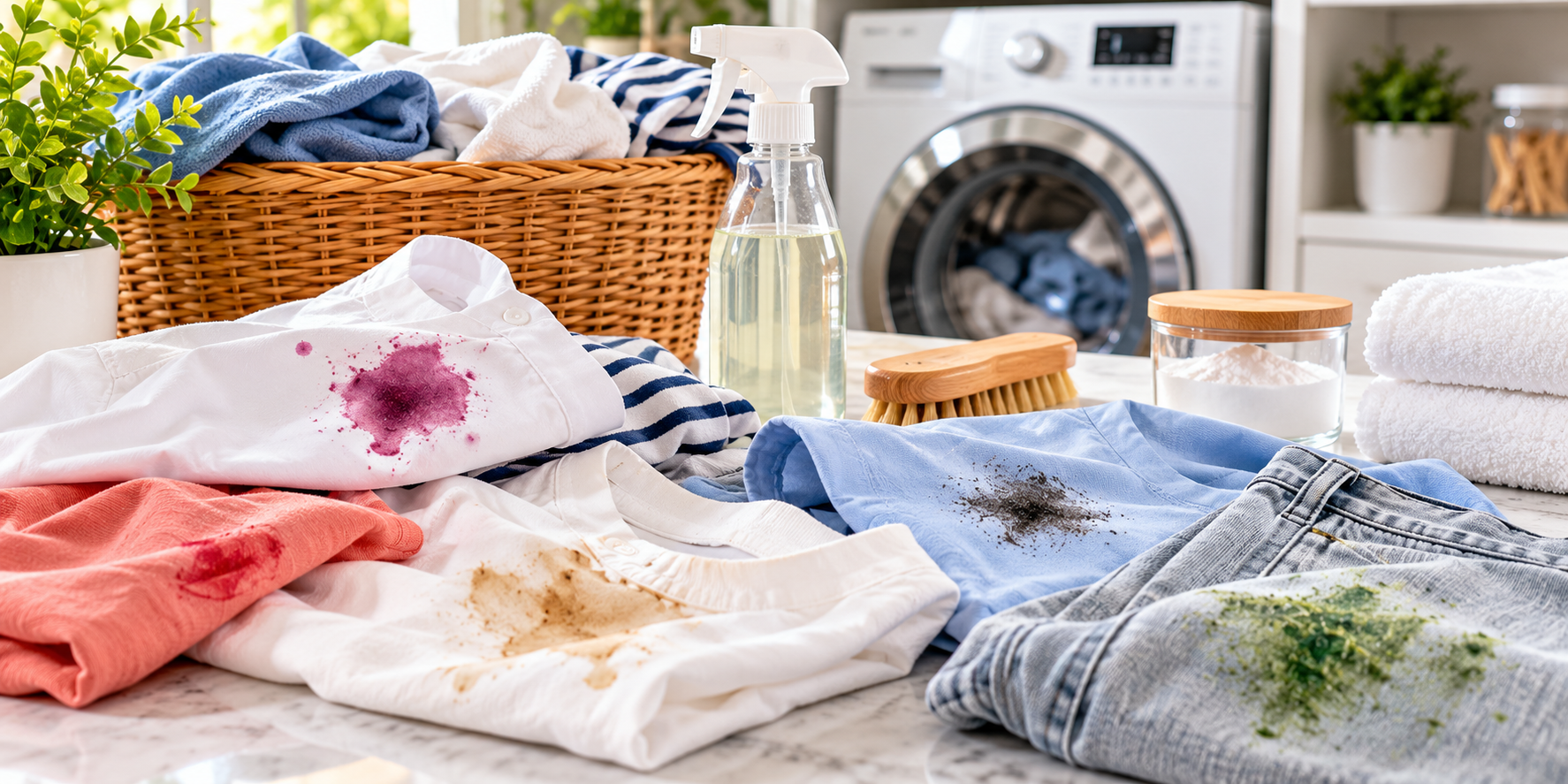
Laundry stains have a remarkable talent for appearing at the worst possible moment.
The spaghetti sauce lands on your favorite white blouse. Your child comes home with grass stains on both knees. And somehow, a pen makes it through the wash without anyone noticing until the damage is done.
Sound familiar?
The good news is that many common clothing stains can be removed with the right treatment, a little patience, and products you probably already have in your laundry room.
The bad news? There's no single magic stain remover that works on everything.
Blood, grease, ink, and rust are different kinds of stains. Treating them all the same way can make matters worse.
This laundry stain removal guide explains what to do first, which treatments work for different stains, and how to avoid turning a small laundry mishap into a permanent wardrobe disaster.
The 6 Golden Rules of Laundry Stain Removal
Before reaching for a bottle of anything, follow these six rules.
1. Act Quickly
Fresh stains are generally easier to remove than old, dried stains. Blot away liquids with a clean white cloth or paper towel. Lift off solids with a spoon or dull knife.
Avoid vigorous rubbing, which can spread the stain or damage the fabric.
2. Check the Fabric Care Label
The garment's care label tells you how the fabric should be washed, dried, and sometimes bleached. Use the label to establish which laundering methods are safe, then choose an appropriate stain treatment.
For silk, wool, cashmere, leather, and dry-clean-only garments, be especially cautious. Many ordinary laundry pretreatments are unsuitable for these materials.
3. Choose the Right Water Temperature
Cold water is a sensible first choice for blood and many unknown stains. Warm water may help remove some greasy stains, provided the fabric and stain-treatment product allow it.
Don't automatically use the hottest water available. Heat can make certain stains harder to remove and may damage or shrink clothing.
4. Test Stain Removers First
Before applying a product to a visible area, test it on an inconspicuous part of the garment. Watch for fading, discoloration, or fabric damage.
This is especially important with rubbing alcohol, hydrogen peroxide, bleach, and specialty stain removers.
5. Follow the Product's Contact Time
Some stain removers work in minutes. Others require a longer presoak. Follow the manufacturer's instructions.
Leaving a pretreatment on clothing for days—or tossing a treated garment into the hamper and forgetting about it—can cause discoloration or damage with some products.
6. Check Before Using the Dryer
This may be the most important rule of all. Inspect stained garments after washing and before tumble-drying.
Dryer heat can make some remaining stains much harder to remove. If the stain is still visible, treat it again and air-dry until you're satisfied with the result.
1. How to Remove Chewing Gum From Clothes
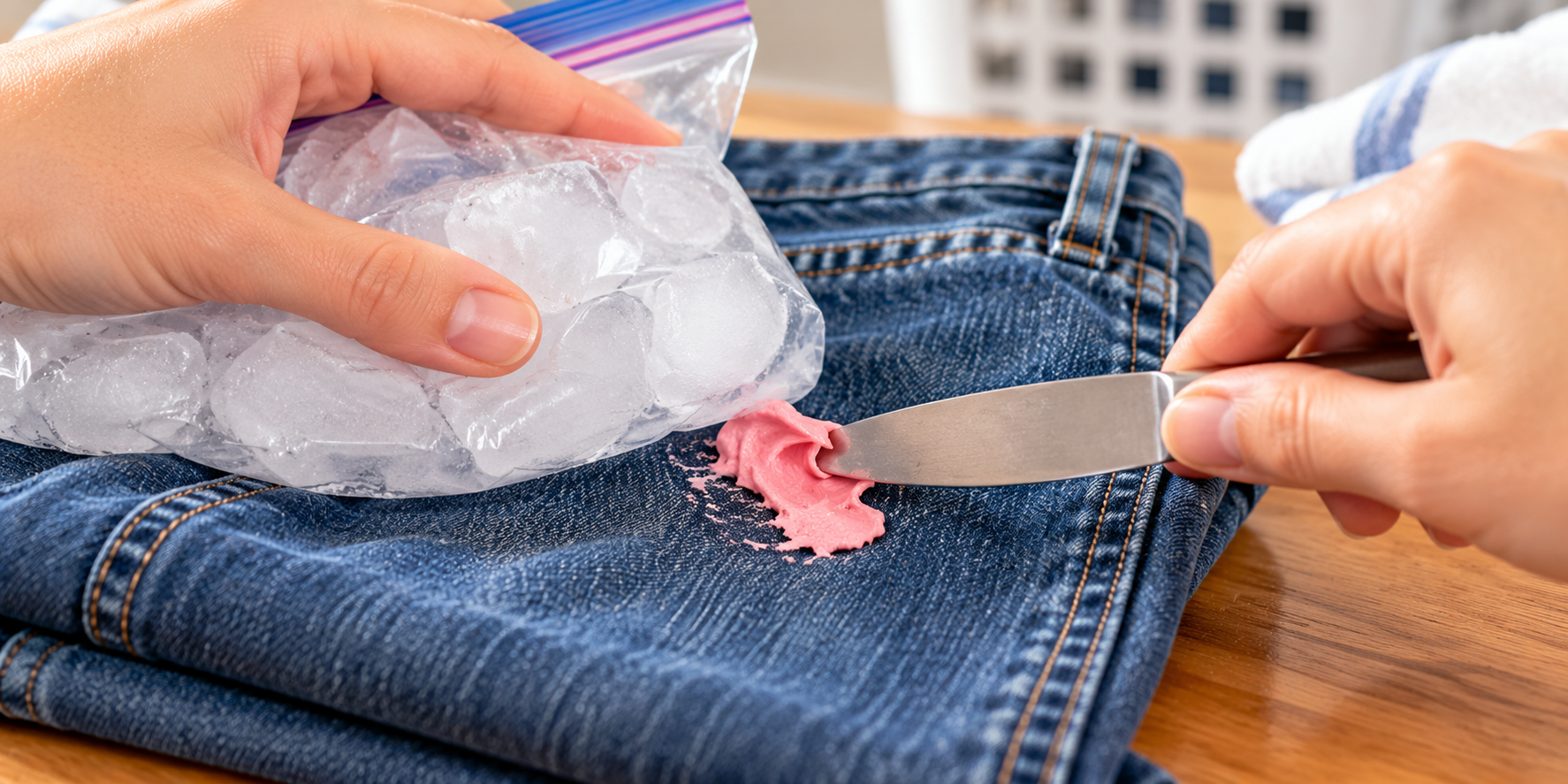
Chewing gum has no business being in a pocket. Unfortunately, it doesn't seem to know that.
Here's what to do:
- Place ice in a sealed plastic bag and hold it against the gum until the gum becomes firm.
- Carefully lift away as much as possible using a dull knife or spoon.
- Treat any remaining residue with a laundry stain remover suitable for the fabric.
- Wash according to the garment's care instructions.
- Check the area before drying.
Avoid scraping aggressively, particularly on knits or delicate fabrics.
2. How to Remove Blood Stains
Blood stains respond best to prompt attention. Start with cold water, not hot.
- Rinse the stained area under cold running water, preferably from the back of the fabric.
- Apply an enzyme-containing laundry detergent suitable for the garment.
- Allow it to work according to the product directions.
- Wash using a fabric-safe cycle and temperature.
- Inspect before drying.
For older stains, a cold-water presoak may help.
Three-percent hydrogen peroxide can sometimes help on suitable washable fabrics, but it may discolor dyes. Spot-test first.
Important: Don't use enzyme detergents on wool or silk unless the product specifically states that it's safe for those fibers.
3. How to Remove Chocolate Stains
Chocolate combines several stain-making ingredients, including fat and pigments.
Which explains why a tiny piece of chocolate can leave such an impressive mess.
- Gently scrape away excess chocolate.
- Rinse the back of the stain with cool water.
- Apply liquid laundry detergent or an appropriate enzyme-containing stain remover.
- Let it sit for the recommended time.
- Wash according to the care label.
Repeat the treatment if necessary before drying.
4. How to Remove Makeup Stains
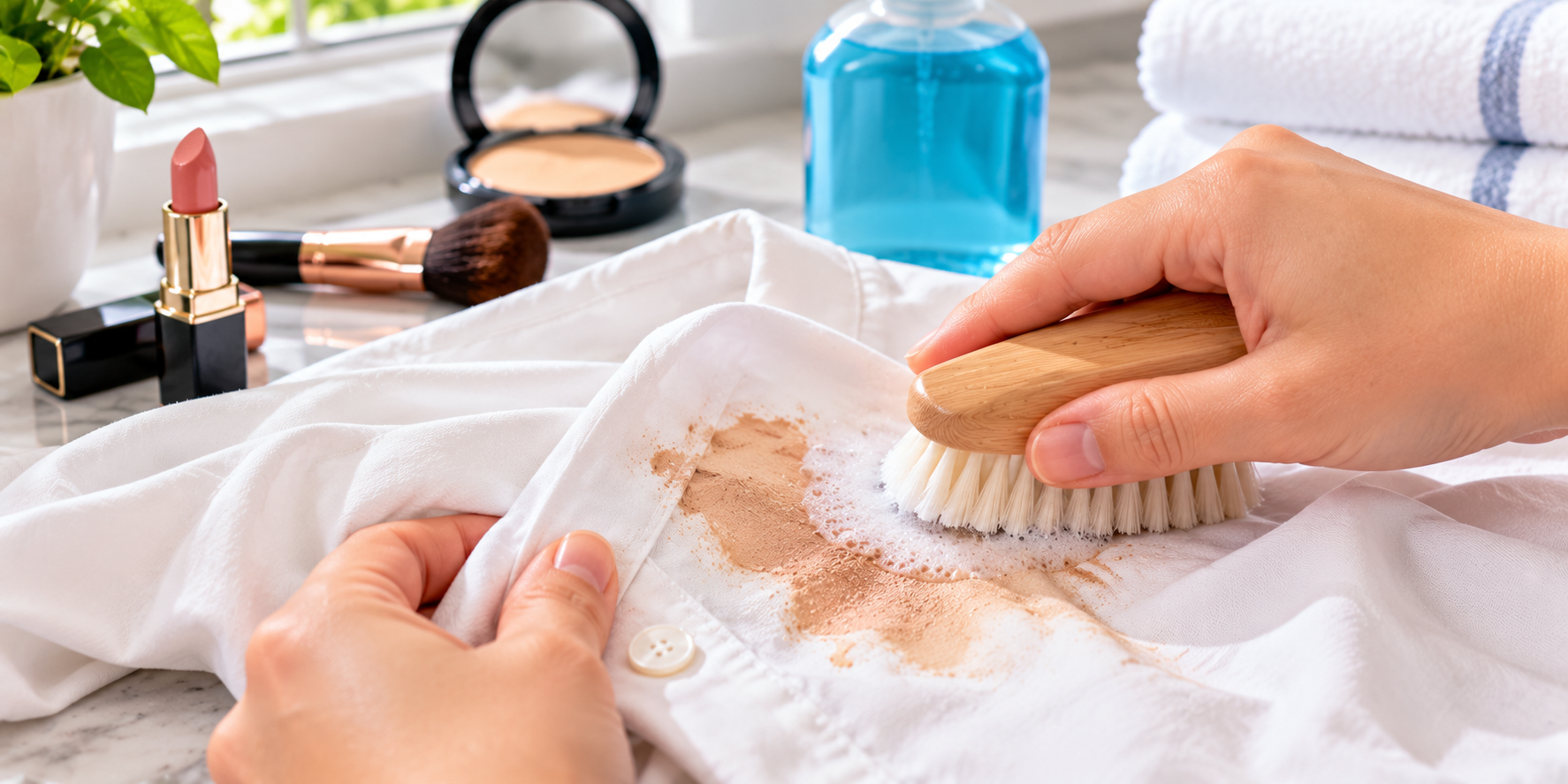
Foundation, lipstick, and other cosmetics often contain oils, waxes, or strong pigments. Start by removing excess makeup without spreading it.
For washable fabrics:
- Blot or lift off the excess.
- Apply a small amount of liquid laundry detergent or a pretreatment designed for greasy stains.
- Gently work it into the stained area without damaging the fabric.
- Allow the recommended contact time.
- Launder and inspect.
Long-wearing lipstick and waterproof makeup may require specialized treatment. If the garment is expensive or delicate, professional cleaning may be the safest choice.
5. How to Remove Crayon Stains
Crayon stains are especially frustrating when a forgotten crayon goes through the dryer. The wax can spread to multiple garments.
For ordinary crayon marks:
- Carefully scrape away excess wax.
- Pretreat with a laundry product intended for waxy or greasy stains.
- Wash at the warmest temperature permitted by the garment's care label and the pretreatment instructions.
- Check before drying.
For crayon that has melted throughout an entire load, multiple treatments may be needed.
Avoid using WD-40 as a routine clothing pretreatment. It introduces an oily, potentially flammable residue that can create another cleaning problem.
If any solvent-based product has been used on clothing, follow its safety instructions carefully and never put solvent-contaminated items in the dryer.
6. How to Remove Grass Stains
Grass stains are practically a childhood uniform. Fortunately, many respond to enzyme-containing laundry detergent.
- Brush away loose dirt.
- Apply an appropriate enzyme detergent or pretreatment.
- Let it work for the time recommended on the label.
- Wash according to the garment's care instructions.
- Repeat if green discoloration remains.
Oxygen bleach may help on some washable, colorfast fabrics if the product and garment instructions permit it. Test colored garments first.
7. How to Remove Ice Cream Stains
Ice cream combines proteins, fats, and sometimes stubborn food coloring. And it melts faster than anyone can eat it.
- Remove any remaining ice cream.
- Rinse the stain with cool water.
- Pretreat with an enzyme-containing laundry detergent appropriate for the fabric.
- Wash as directed.
- Check for any lingering grease or color.
Chocolate and berry ice cream may require additional treatment for the coloring ingredients.
8. How to Remove Ink Stains
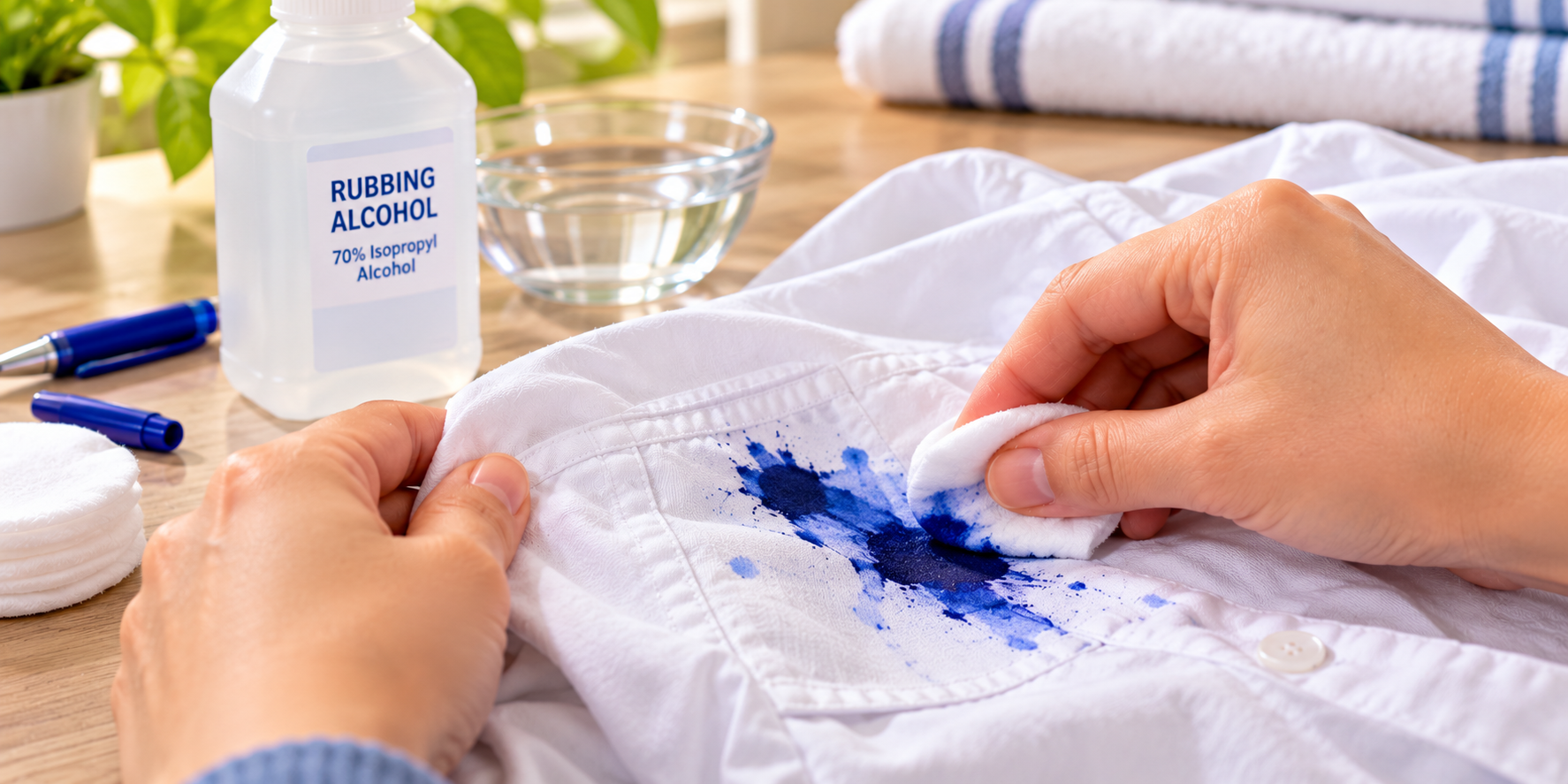
Ink stains vary considerably. A washable marker is not the same as permanent marker, and ballpoint ink isn't identical to fountain-pen ink.
For some washable fabrics and certain inks, rubbing alcohol may help.
- Place a clean absorbent cloth beneath the stain.
- Test rubbing alcohol on a hidden area first.
- If safe, dab a small amount onto the stain with a clean cloth or cotton swab.
- Blot as the ink transfers, changing the absorbent material frequently.
- Rinse thoroughly and wash as directed.
Don't rub vigorously.
Alcohol can damage certain dyes, finishes, and fibers. Keep it away from flames and heat, and do not machine-dry anything that still contains solvent residue.
If the ink is permanent or the garment is valuable, consider professional cleaning.
9. How to Remove Fruit Juice Stains
Fruit juice stains can leave surprisingly persistent colors behind.
- Blot excess liquid immediately.
- Rinse the back of the stain with cool running water.
- Apply a suitable laundry stain remover or liquid detergent.
- Wash according to the care label.
- Air-dry until the stain is completely gone.
For stubborn stains on compatible fabrics, a properly diluted oxygen-bleach soak may help. Follow the product directions and check colorfastness first.
10. How to Remove Ketchup and Tomato Sauce Stains
Tomato sauce seems to have an uncanny ability to find white clothing. Ketchup also contains sugar, vinegar, and other ingredients, while pasta sauce may contain oil.
- Scrape away excess sauce.
- Rinse from the back of the fabric with cool water.
- Apply liquid laundry detergent to the stained area.
- Allow it to work according to the product directions.
- Wash and inspect.
If the sauce contains substantial oil, you may need to repeat the detergent pretreatment.
For stubborn tomato discoloration, consider an oxygen-bleach product only if it's suitable for the garment.
11. How to Remove Mildew Stains
Mildew stains deserve a little more caution than an ordinary food spill. First, determine whether the garment can be cleaned safely.
For a small amount of visible mildew on a washable, sturdy fabric:
- Take the garment outdoors, away from other laundry.
- If appropriate, gently brush away loose surface growth without breathing in dust or spores.
- Wash separately using a detergent and water temperature suitable for the fabric.
- Use a laundry treatment specifically labeled for the material and purpose if needed.
- Dry thoroughly.
Don't automatically pour chlorine bleach onto the stain. Bleach can damage fabrics, and not every garment is bleach-safe.
Severely moldy, fragile, or contaminated items may need professional evaluation or disposal.
Never mix chlorine bleach with ammonia, vinegar, acids, or other cleaners.
12. How to Remove Mud Stains
Unlike many spills, mud is often easier to tackle after it dries. That's one less emergency to deal with.
- Let the mud dry.
- Brush or shake away as much loose soil as possible.
- Pretreat the remaining stain with laundry detergent.
- Presoak if necessary and if the garment allows it.
- Wash separately from lightly soiled clothing.
For heavily soiled gardening clothes or sports uniforms, you may need a longer presoak and a repeat wash.
Avoid overloading the washer. Muddy clothes need room to move.
13. How to Remove Sweat and Deodorant Stains
Yellowed underarms and white deodorant marks are not necessarily the same problem. Sweat, body oils, and antiperspirant ingredients can leave different kinds of buildup.
For washable shirts:
- Apply liquid laundry detergent or a pretreatment appropriate for body soils.
- Gently work it into the stained area.
- Allow the recommended contact time.
- Wash according to the garment's instructions.
- Repeat as needed.
For stubborn buildup, use a product specifically intended for perspiration or antiperspirant stains.
Avoid assuming chlorine bleach will fix yellowing. It can damage some fabrics and isn't suitable for every stain.
14. How to Remove Urine Stains
Urine stains can leave both discoloration and unpleasant odors. Prompt treatment helps.
- Blot away excess moisture.
- Rinse the fabric with cool water.
- Apply an enzyme-containing laundry detergent appropriate for the garment.
- Allow it to work according to the product directions.
- Wash separately if heavily soiled.
- Check that both the stain and odor are gone before drying.
For persistent odors, choose a laundry product specifically designed to address them.
Avoid combining cleaning chemicals or applying strong disinfectants that aren't intended for clothing.
15. How to Remove Red Wine Stains
A spilled glass of red wine can make a perfectly nice evening considerably less relaxing. Act quickly.
- Blot the spill with a clean white cloth.
- Rinse the back of the stained area with cool water if possible.
- Apply a stain remover suitable for the fabric and colored beverage stains.
- Wash according to the care label.
- Inspect before drying.
An oxygen-bleach presoak may help on compatible washable fabrics.
Salt can absorb some spilled liquid, but it isn't a reliable substitute for proper stain treatment.
For silk, wool, or dry-clean-only garments, blot gently and seek professional advice.
16. How to Remove Rust Stains From Clothes
Rust is different from ordinary dirt, grease, or food stains. It requires special care. Do not use chlorine bleach on rust stains. It can make rust discoloration more difficult to remove.
For washable fabrics:
- Check the garment's care instructions.
- Choose a commercial rust remover specifically labeled for use on clothing.
- Test the product as directed.
- Follow its application and rinsing instructions exactly.
- Wash the garment only after the rust treatment has been thoroughly rinsed away and the product instructions permit laundering.
Some rust removers contain strong acids and aren't suitable for all fibers or finishes. Never combine a rust remover with bleach or another cleaning chemical.
For more detailed help, see Rust Stains on Clothes.
What About Homemade Laundry Stain Removers?
You don't always need a specialty product for a small stain. Liquid laundry detergent is often a practical first treatment, particularly for washable cottons and synthetic fabrics.
Other household products sometimes used for stain removal include:
Three-percent hydrogen peroxide: May help with some stains on suitable washable fabrics, but can fade colors. Test first.
White vinegar: Can sometimes help with certain residues and odors, but isn't a universal stain remover and may be unsuitable for some materials.
Mild hand dishwashing liquid: Can help lift grease during spot treatment, but use sparingly and rinse thoroughly before machine washing. Don't add it directly to the washing machine.
Laundry bar soap: Can be useful for pretreating some washable fabrics. Follow the product directions.
Be careful with homemade recipes that combine multiple chemicals. Mixing ingredients doesn't necessarily make them more effective—and some combinations are dangerous.
For more ideas, visit Homemade Laundry Stain Removers.
Common Laundry Stain Removal Mistakes
Even experienced laundry-doers occasionally make these mistakes.
Rubbing Too Hard
Aggressive scrubbing can spread stains, distort knits, or roughen delicate fabric. Blot and work gently instead.
Using Hot Water Automatically
Hot water isn't always the best choice. Choose the temperature based on the stain, fabric, and treatment instructions.
Mixing Cleaning Products
Never mix chlorine bleach with ammonia, vinegar, acids, or other cleaning products. Dangerous gases can result.
Using Too Much Detergent
More detergent doesn't automatically mean cleaner clothes. Excess detergent can leave residue and interfere with rinsing.
Forgetting to Check Before Drying
Always inspect the garment before putting it in the dryer.
Treating Every Fabric the Same Way
A cotton T-shirt can usually tolerate treatments that would be inappropriate for silk, wool, leather, or specialty fabrics.
When in doubt, choose a gentler method or ask a professional cleaner.
Frequently Asked Questions About Laundry Stain Removal
Should I use hot or cold water to remove stains?
It depends on the stain and fabric. Cold water is a good starting point for blood and unknown stains. Warm water may help with some oily soils. Always consider the garment's care instructions and the stain remover's directions.
Can I remove a stain after the clothes have been dried?
Sometimes. Set-in stains are often harder to remove, but repeated treatment may help. Success depends on the stain, fabric, and previous heat exposure.
Is hydrogen peroxide safe for colored clothes?
Not always. Even three-percent hydrogen peroxide may cause fading or discoloration. Test on a hidden area before use.
Is vinegar a good laundry stain remover?
Vinegar has some limited household cleaning uses, but it isn't the best treatment for every stain. It shouldn't be mixed with bleach, and its suitability depends on the fabric and finish.
What is the best all-purpose laundry stain remover?
For many everyday washable garments, a good liquid laundry detergent or commercial laundry pretreatment is a useful starting point. However, specialty stains such as rust and certain inks may need different products.
How long should I leave stain remover on clothing?
Follow the product label. Contact times vary, and allowing a product to dry on fabric or remain for days can sometimes cause damage.
When should I take stained clothing to a dry cleaner?
Consider professional cleaning for dry-clean-only clothing, expensive garments, delicate fibers, persistent ink stains, and stains that don't respond to safe home treatment.
Keep Going: More Laundry Tips and Stain Solutions
Now that you've tackled the stains, here are a few more ways to make laundry day easier.
Removing Unknown Clothing Stains
What to try when nobody admits knowing where that mysterious spot came from.
Liquid or Powder Laundry Detergent?
Learn how different detergent formulations handle everyday laundry.
How to Sort Clothes
Keep colors, fabrics, and wash temperatures organized before the machine starts.
Laundry Temperature: Hot, Warm, or Cold?
Choose a wash temperature that cleans effectively without unnecessarily damaging your clothes.
How to Machine Wash Sweaters
Help your washable sweaters stay clean without losing their shape.
- Clean Home
- Laundry Guide
- Laundry Stain Removal Guide
Free 15-Minute Daily Reset Checklist
Get Notes on Keeping House
Fifteen minutes a day. No weekend cleaning marathons. No guilt. Sign up for my newsletter and I'll send you the printable checklist that makes it happen.
Send My ChecklistNo spam, ever. Unsubscribe anytime.

Free Printable
Notes on Keeping House
Sign up and get my 15-Minute Daily Reset Checklist. One timer, five zones, and a house that stays under control.
Send My ChecklistNo spam, ever. Just smart, funny tips for keeping house from Tara Aronson.