How to Remove Rust Stains From Clothes (Even Old Ones)
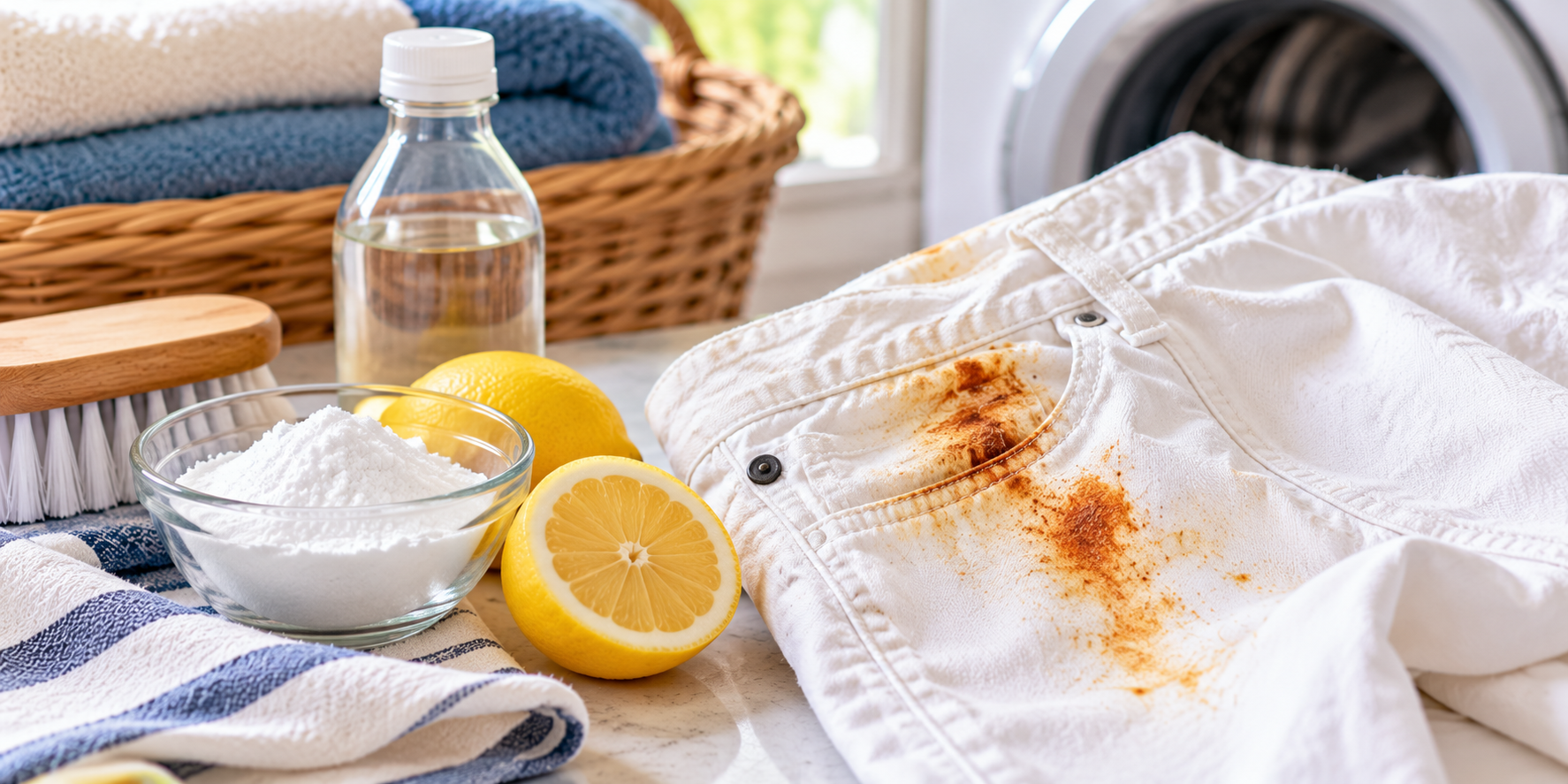
Rust stains look like a disaster: that orange-brown blotch on your favorite white shirt or the knee of your jeans. But they're usually not the end of the garment. You just have to treat them differently from every other stain.
The two big rules: never use chlorine bleach on rust, and never put a rust-stained garment in the dryer. Bleach can make rust darker, and the dryer's heat can make it permanent. Everything else comes down to a little acid, a little patience and your kitchen pantry.
Check the care label first. If the garment is delicate, vintage or dry-clean only, take it to a professional and tell them it's rust.
How to Remove Rust Stains From Clothes
The classic fix uses lemon juice and salt. The lemon's acid dissolves the rust, and the salt gives it a gentle scrub. It works best on white and colorfast cotton and linen.
1. Lay the stained area flat on a clean white towel.
2. Saturate the stain with lemon juice, fresh or bottled.
3. Sprinkle salt over the wet spot.
4. Gently work the mix into the stain with your fingers. Don't scrub hard.
5. Let it sit for 30 minutes to an hour. For white cotton, set it in the sun. Sunlight speeds up the lemon's work.
6. Rinse well with cool water.
7. Check the stain. If you can still see it, repeat steps 2 through 6.
8. Once it's gone, wash the garment according to the care label.
And until the stain is completely gone, no dryer. Air-dry it, check it again, and treat it again if you need to.
How to Remove Old Rust Stains From Clothes
Old rust stains take more patience, not more muscle. Rust is one of those stains where attacking it harder can make things worse. Try these in order:
1. Repeat the lemon and salt method two or three times, rinsing between rounds.
2. Make a cream of tartar paste. Mix 1 tablespoon of cream of tartar with enough lemon juice to make a paste. Spread it on the stain and let it sit for 30 minutes, then rinse. It's still gentle, but it's a little stronger than lemon alone.
3. Use a commercial rust remover made for fabric. See the next section.
Don't combine methods at the same time, and rinse completely before you switch to something new.
Removing Rust Stains From White Clothes

White clothes are where rust stains show the most, and where most people reach for the bleach. Don't. Chlorine bleach reacts with rust and can turn a light orange spot into a dark brown one that never comes out.
Use lemon and salt in the sun, cream of tartar paste or a fabric-safe rust remover instead. And don't assume that because something is white, it can withstand any stain treatment. White polyester and spandex are still delicate.
Removing Rust Stains From Colored Clothes
Lemon juice can lighten colors, so:
- Test it first on an inside seam or hem. Wait 15 minutes and check for fading.
- Keep the treatment short, 15 to 30 minutes at most.
- Keep colored clothes out of the sun while the lemon is on them.
- If the color starts to change, stop and rinse right away.
For anything expensive or sentimental, take it to a dry cleaner.
Using a Commercial Rust Stain Remover
Rust removers made for sinks, tubs, tile or metal are not automatically safe for clothes. Use one only if the label says it's for fabric or laundry, and:
- Check that it's safe for your fabric.
- Follow the directions exactly, including how long to leave it on.
- Rinse the garment thoroughly.
- Wear gloves.
- Keep the product locked up, away from kids and pets.
Read the ingredients. Some rust removers contain hydrofluoric acid (sometimes listed as "hydrogen fluoride"). It's one of the most dangerous chemicals you can buy for household use. It can cause deep burns that don't hurt right away.
If a product contains it, choose a different one. If you use it anyway, wear chemical-resistant gloves and eye protection, and follow every safety warning on the label.
And never mix a rust remover with bleach or any other cleaner.
What NOT to Do With Rust-Stained Clothes
- Don't use chlorine bleach. It can set the stain and make it darker.
- Don't put the garment in the dryer until the stain is gone.
- Don't scrub delicate fabric hard. You'll damage the fibers before you remove the rust.
- Don't use a household rust remover unless the label says it's safe for fabric.
- Don't mix stain removers. Acids and bleach together release toxic chlorine gas.
More isn't better here. Gentle and repeated wins.
Why Do Rust Stains Appear on Clothes?
Rust stains come from iron, and iron shows up in more places than you'd think:
- Rusty metal: hangers, drying racks, patio furniture, playground equipment
- Metal buttons, snaps, zippers and rivets that rust in the wash
- Bobby pins, paper clips, keys and coins left in pockets
- A chipped or rusty spot inside the washing machine drum
- Iron in well water, or rusty water pipes
If you keep finding little orange spots on clothes after washing, don't blame the clothes. Run your hand around the inside of the washer drum and look for chips or rust spots. Then run an empty load with a white towel.
If the towel comes out spotted, the problem is your washer or your water. If you're on a well, an iron filter can help. Investigate the source before sacrificing another load of clothes.
Washing Machine Cleaning Tips →
What If the Rust Stain Won't Come Out?
Stop. Repeated treatments eventually weaken the fabric, especially with acids. For inexpensive clothes, try one round of a fabric-safe commercial remover. For anything delicate, expensive or sentimental, take it to a professional cleaner and tell them it's rust.
Sometimes knowing when to stop experimenting is the best stain-removal technique of all.
Frequently Asked Questions About Rust Stains on Clothes
Can you get old rust stains out of clothes? Often, yes. Repeat the lemon and salt treatment a few times, try a cream of tartar paste, or use a fabric-safe rust remover. Just keep the garment out of the dryer until the stain is gone.
Does bleach remove rust stains? No. Chlorine bleach reacts with rust and can make the stain darker and permanent.
Does vinegar remove rust from clothes? White vinegar can help with light rust stains. Soak the stain in it for 30 minutes, then rinse. Lemon juice and salt usually work faster.
Does lemon juice really remove rust stains? Yes. Its citric acid dissolves rust. Combine it with salt, and put white cotton in the sun, for the best results.
Why do I keep getting rust spots on my clothes? Usually it's a chipped washer drum, rusty pipes, iron in your water or metal hardware on the clothes. Run a white towel through an empty wash to test the machine.
Want Laundry Day to Take Less of Your Day?
My book The Daily Home Reset builds laundry into a 15-minute daily routine, so stains get treated before they set.
And if your closet is full of stained clothes you keep meaning to fix, Room by Room: How to Declutter a Lifetime of Stuff and Get Your Space Back will help you decide what's worth saving.
Keep Going
Get the rest of your stains out on the first try with these related guides:
- Laundry & Stain Removal Guide: How to Wash Clothes: Everything from sorting to stains, in one place.
- Laundry Stain Removal Guide: Step-by-step fixes for the most common stains.
- 17 Laundry Stain Removal Tips: Quick fixes for everyday laundry disasters.
- Removing Unknown Clothing Stains: What to do when you have no idea what that spot is.
- Homemade Laundry Stain Removers: Kitchen-cabinet fixes for everyday stains.
- How to Wash White Clothes: Keep whites bright without the wrong bleach.
- Grease Stain Removal: Get oil and grease out of clothes.
- Washing Machine Cleaning Tips: Keep the washer clean so it isn't the source of the stains.
- Clean Home
- Laundry Guide
- Remove Rust Stains On Clothes