Holiday Safety Tips for Entertaining: 20 Things to Check Before Guests Arrive
Holiday entertaining changes your house. Normally, you know where everything is. You know that the third stair creaks. You know the rug by the front door slides.
You know the kitchen gets crowded when two people stand beside the island. Your guests don't.
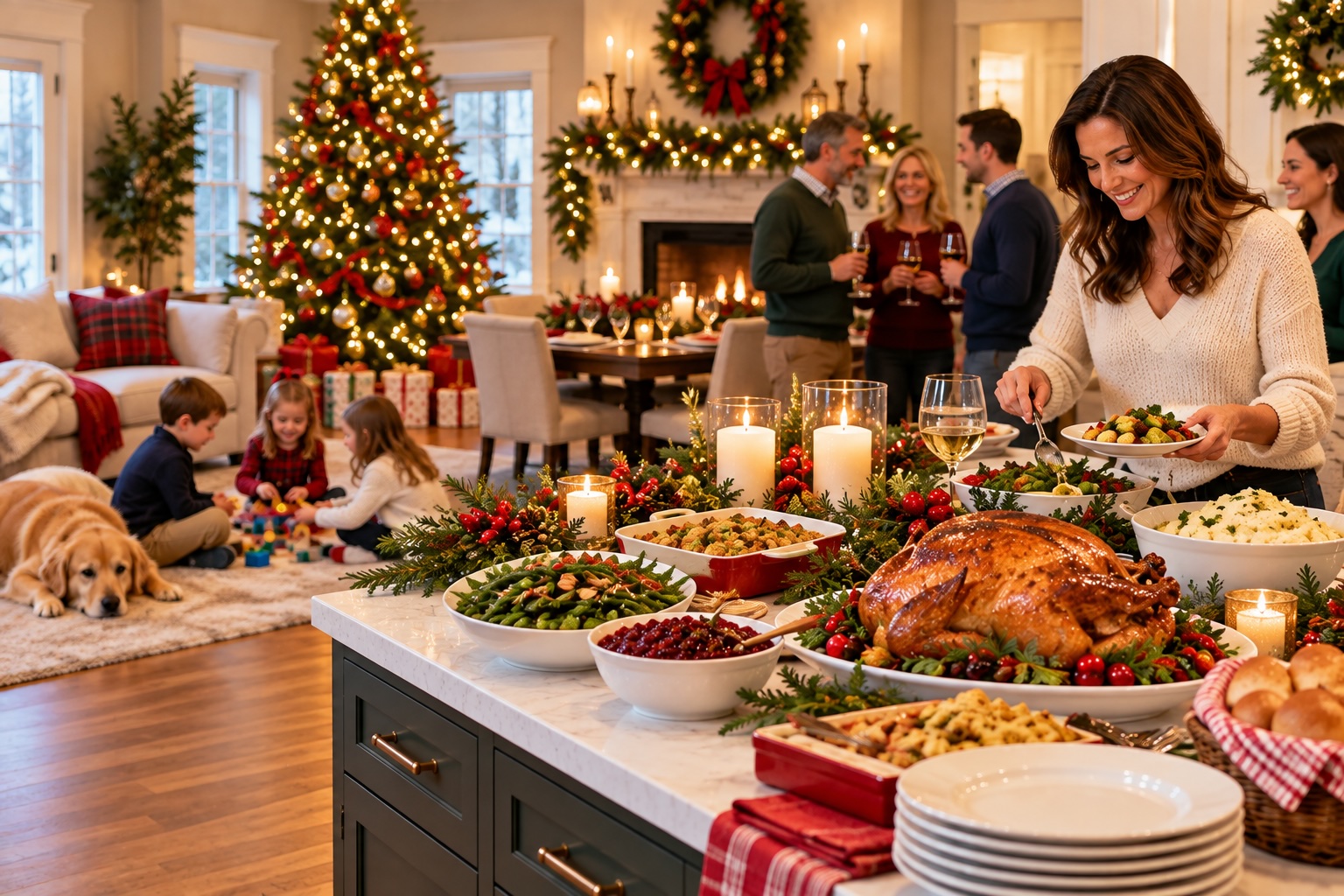
Then add: Children. Grandparents. Pets. Candles. Cooking. Extension cords.Hot drinks. Coats. Alcohol.
A Christmas tree. And 14 people trying to move through a house designed for four.
Suddenly, ordinary household quirks become holiday hazards. This doesn't mean you need to greet guests wearing a reflective safety vest.
A quick pre-party check can eliminate many of the obvious problems without turning Christmas into a risk-management seminar.
Here are 20 places to start.
1. Walk Through Your House Like a Guest
Before people arrive, walk the route they'll use. Start outside.
Come through the entrance. Walk to the living room. Go to the bathroom. Go to the kitchen and dining area.
If people are staying overnight, walk to the guest room, too.
Look for:
- Cluttered walkways
- Loose rugs
- Cords
- Toys
- Shoes
- Poor lighting
- Slippery areas
- Furniture sticking into traffic paths
You're used to navigating these things. Your guests aren't. Especially the one carrying a plate, talking to somebody, and looking backward.
2. Clear the Entryway
Holiday guests arrive carrying things. Coats. Bags. Gifts. Food. Children. Sometimes all five simultaneously.
Give them somewhere to put everything.
Clear unnecessary shoes and household clutter from the entrance. Make room for coats. Keep the walking path open.
If the weather is wet, deal with tracked-in water promptly so the entrance doesn't become an ice rink without the ice.
Festive skating belongs elsewhere.
3. Check Outdoor Walkways
If guests are arriving after dark, make sure the route to your door is well lit. Clear obvious obstacles.
Depending on your climate, address:
- Wet leaves
- Ice
- Snow
- Uneven obstacles
- Garden hoses
- Toys
- Packages
Check steps and railings too. The party shouldn't begin with an unscheduled trip down the front stairs.
4. Test Smoke Alarms
Before hosting a large gathering or overnight guests, make sure your smoke alarms are working.
NFPA specifically recommends testing smoke alarms before holiday entertaining and making guests aware of the home's fire escape plan.
If people are staying overnight, make sure they know how to get out of the house.
You don't need to conduct a fire drill between appetizers and dinner. Just make sure exits aren't a mystery.
5. Keep Exits Clear
Holiday decorating can gradually consume every available space.
Don't let decorations, packages, furniture, or party supplies obstruct exits.
Keep doors and normal escape routes usable. The giant inflatable snowman doesn't take priority over the doorway. He'll understand.
6. Be Careful With Candles
Candles and Christmas look beautiful together. Candles and Christmas decorations can also be an unfortunate combination.
Keep burning candles:
- In sight
- Away from combustible decorations and other things that can burn
- Away from children and pets
- Where they can't easily be knocked over
Extinguish them before you leave the room or go to bed. Flameless candles are an easy alternative in busy entertaining areas.
This is particularly useful when children, pets and flowing holiday sleeves are involved.
Nothing says “perhaps we should have used the battery candle” quite like somebody's sweater passing six inches above a flame.
7. Check Your Holiday Lights
Look over light strings before using them.
Don't use sets with damaged cords or loose connections, and follow the manufacturer's instructions about how many strands can safely be connected.
Don't overload electrical outlets. Use lights only for their intended indoor or outdoor application, and turn holiday lights and decorations off before leaving home or going to bed.
More plugs do not necessarily equal more Christmas. At some point, they equal an electrical problem wearing tinsel.
8. Watch the Extension Cords
Extension cords can create both electrical and trip hazards.
Use cords rated for their intended use and position them so guests aren't repeatedly walking across them.
Don't run a cord through the middle of the party because the Christmas village apparently requires its own power grid.
Move the decoration. The village will survive.
9. Keep the Christmas Tree Watered
If you have a live Christmas tree, keep it adequately watered and away from heat sources and open flames.
If you have an artificial tree, follow the manufacturer's instructions and look for appropriate fire-resistance labeling when purchasing one.
And regardless of tree type:
Don't put burning candles on it. There are traditions worth preserving. That isn't one of them.
10. Keep the Kitchen From Becoming a Crowd Scene
Holiday kitchens attract people. Unfortunately, they also contain:
- Hot pans
- Knives
- Boiling liquids
- Open ovens
- Stovetop burners
- Electrical appliances
Keep unnecessary traffic out of the active cooking zone.
Children and pets, especially, should be somewhere else when cooking is intense.
Your kitchen can be social later. While you're carrying a roasting pan, it needs to be a workplace.
11. Turn Pot Handles Inward
Position pot and pan handles so they can't easily be bumped or grabbed.
Keep hot foods and drinks away from counter and table edges that young children can reach.
Also consider the route between the kitchen and dining table. If carrying the turkey requires navigating:
Grandma.
Two toddlers.
The dog.
Three chairs.
and Uncle Steve holding a drink—
clear the route first. The turkey has been through enough.
- Clean Home
- Safe at Home
- Holiday Safety Tips For Entertaining